Everest Base Camp Trek
Price for one tour per person
INR 67,000/-

Region
Kathmandu | Nepal

Duration
13 Days

Max Altitude
18200 Ft.
Trekking Km
112 KM

Grade
Difficult
Fixed Departure Dates
16 Mar-28 Mar Open
8 Mar-13 Mar Open
22Mar-3 Apr Open
23 Mar-4Apr 9 Seats Left
29 Mar-10 Apr 10 Seats Left
30 Mar-11 Apr 8 Seats Left
6 Apr-18Apr Open
12 Apr-24 Apr Open
13 Apr-25Apr 1 Seats Left
14 Apr-26 Apr Open
19 Apr-1 May Open
20 Apr-2 May Open
26 Apr-8 May closing
27 Apr-9 May Open
Fixed Departure Dates
- +5% GST (goods and services tax).
- Services from Kathmandu to Kathmandu.
- Lukla flight, Food & Stay in Kathmandu included.
USD 1500 +5% GST for Non-Indians and OCI card holders
Trek overview
The Everest Base Camp Trek is the most famous trek in the world for a reason. You walk through Sherpa villages, cross high suspension bridges, visit ancient monasteries and finally stand at the foot of the Khumbu Icefall with the world’s highest mountain above you. For many hikers, it is a journey of a lifetime.
Adventure Rishikesh India arranges fixed-departure Everest Base Camp trek groups from Kathmandu with certified trek leaders, teahouse accommodations, permits and complete medical support. Learn all about the route, itinerary, cost, best time, difficulty, fitness needs and booking, so you can plan with confidence.
What Is the Everest Base Camp Trek?
The EBC trek is a teahouse trek in the Khumbu region of Nepal. You fly from Kathmandu to Lukla and trek approximately 112km round trip through Phakding, Namche Bazaar, Tengboche, Dingboche, Lobuche and Gorakshep to Everest Base Camp. Most groups also include a climb of Kala Patthar, a viewpoint at around 5,550 m (18,200 ft), which is the high point of the trek and provides the best close-up view of Mount Everest.
The Everest Base Camp trek takes you through the Sagarmatha National Park, a UNESCO World Heritage site and offers views of four of the world’s six tallest mountains; Everest, Lhotse, Makalu and Cho Oyu.
Everest Base Camp Trek: Quick Facts
| Detail | Information |
|---|---|
| Region | Khumbu, Nepal (starts and ends in Kathmandu) |
| Duration | 13 days |
| Trek distance | About 112 km round trip |
| Highest point | Kala Patthar, about 5,550 m (18,200 ft) |
| Everest Base Camp altitude | About 5,364 m (17,600 ft) |
| Grade | Difficult |
| Accommodation | 3-star hotel in Kathmandu, teahouses on the trek |
| Meals | Veg and egg, from Day 2 lunch to Day 13 breakfast |
| Price (Indian nationals) | ₹67,000 per person + 5% GST |
| Price (non-Indians and OCI holders) | USD 1,500 + 5% GST |
| Best time | March to May, September to November |
Why Do the Everest Base Camp Trek?
- Closest view of Everest: Standing at Kala Patthar at sunrise is the highlight for most trekkers.
- Sherpa culture: You stay in mountain villages and visit Tengboche, the largest monastery in the Khumbu region.
- Classic Himalayan scenery: Suspension bridges, yak trails, glacier moraines and prayer flags.
- Not technical: You do not need climbing skills, only stamina and good preparation.
- Safe structure: Certified trek leaders, oxygen, a medical kit and planned acclimatisation days.
Details Itinerary
- Altitude: 1,400 m / 4,600 ft
- Activities: Exploring Kathmandu, Briefing Session
- Accommodation: Hotel (included)
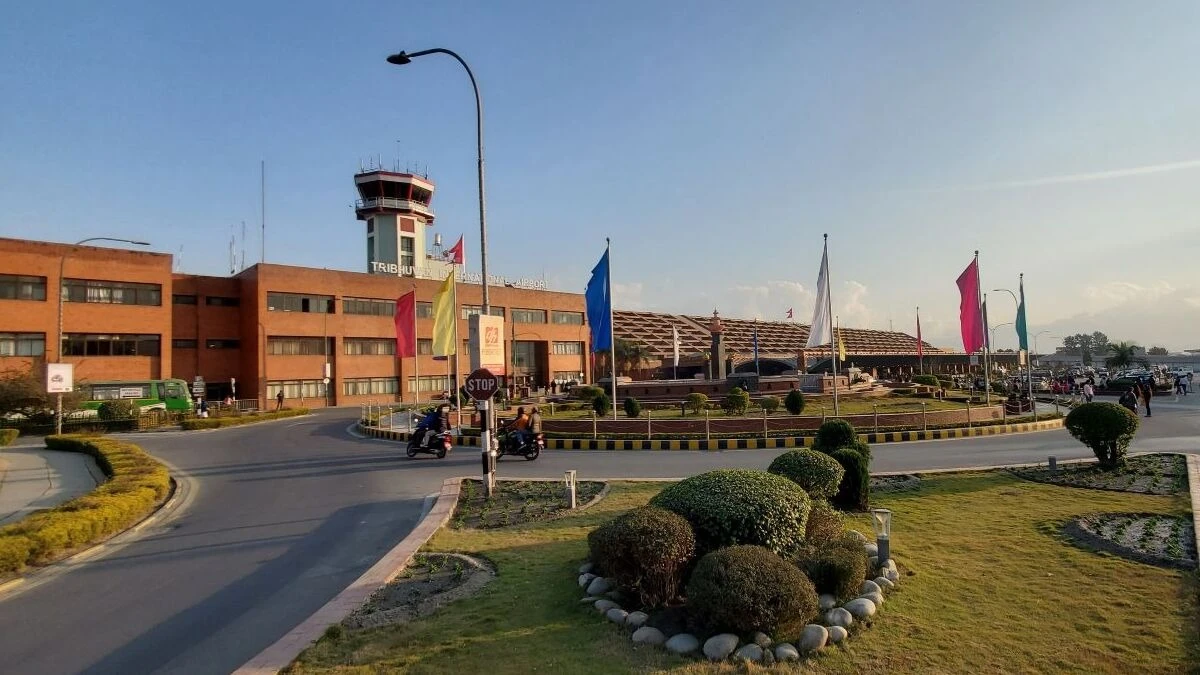
Welcome to Nepal, a true paradise for trekkers, renowned for its majestic Himalayan peaks, rich biodiversity, and captivating culture and history. Upon arrival at Kathmandu airport, you can easily find a taxi to take you to your hotel. Once you check in, take some time to relax and refresh. In the evening, there will be a briefing session where you’ll learn about the trek and the detailed schedule for the days ahead. This is the perfect opportunity to ask any questions you might have about the trek.
After the briefing, take some time to explore the vibrant city of Kathmandu, where you can also do some last-minute shopping for any necessary trekking gear and equipment.
Important Note: Since April 2019, due to construction and congestion at Kathmandu Airport, many flights to Lukla have been redirected to Ramechhap Airport in Manthali, which is about a 4-hour drive from Kathmandu. If your flight is scheduled from Ramechhap, you should plan to arrive in Kathmandu the night before and be prepared to leave the city by 1 a.m. to catch an early morning flight from Ramechhap.
- Altitude: Lukla – 2,850 m / 9,350 ft
- Phakding – 2,600 m / 8,500 ft
- Trek Distance (Lukla to Phakding): 7 km |
- Duration: 4-5 hours
- Altitude Gain: 1,200 m / 3,900 ft
- Activities: Flight to Lukla, Trek to Phakding
Accommodation: Teahouse stay in Phakding
Start your day with an early morning flight from Kathmandu or Ramechhap to Lukla, a 30 to 35-minute journey offering stunning panoramic views of the surrounding landscape. Though the planes are small, the flight is breathtakingly scenic. Upon arrival at Lukla, our representatives will meet you at the airport, and after a brief rest, the trek to Everest Base Camp begins.
The trek from Lukla to Phakding covers a 7 km trail, which takes approximately 4 to 5 hours. The route passes through charming Nepali mountain villages, lush green hills, suspension bridges, and dense forests. The path starts with a gradual descent, featuring gentle ascents and descents throughout.
As you trek, you’ll pass through Cheplung village, where you’ll catch your first glimpse of the sacred Mt. Khumbila. The trail also includes a scenic suspension bridge offering views of Kusum Kanguru. Continuing onward, a short climb will bring you to Ghat Village, and from there, a leisurely walk of about an hour and a half will lead you to Phakding.
Along the way, you’ll notice boulders engraved with Buddhist prayers, adding a spiritual touch to your journey. You can buy or refill your water bottles at teahouses along the trail. Your day will end with an overnight stay in a cozy teahouse in Phakding, where you can relax and prepare for the next leg of your trek.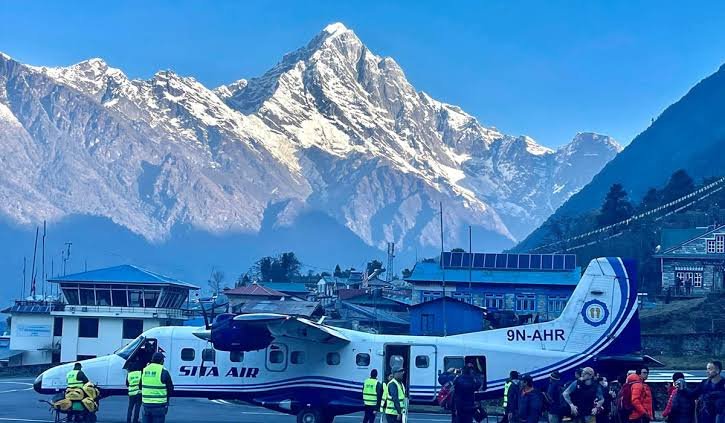
- Altitude3,450 m 11,300 ft
- Trek Distance: 10 km |
- Duration: 7 hours
- Altitude Gain: 850 m / 2,800 ft
- Activities: Trek to Namche Bazaar, Enter Sagarmatha National Park
- Accommodation: Guesthouse stay in Namche Bazaar
After breakfast, we will begin our trek from Phakding towards Namche Bazaar. Today’s trail is a blend of moderate and steep climbs, offering captivating views of lush green mountains. You will cross several suspension bridges spanning the Dudh Koshi and Bhote Koshi rivers. The route will lead you to the entrance of Sagarmatha National Park, a UNESCO World Heritage Site, where your trekking permits will be checked, and officials will register your details.
The trek starts with an easy and pleasant path that involves gentle ascents and descents. Early on, you’ll cross a suspension bridge over the Dudh Koshi River and continue walking through scenic terrain. The route includes another bridge over the Bhote Koshi River, a bustling section often filled with trekkers and porters. After a 20-minute uphill walk, you’ll reach Monjo, a popular rest stop for trekkers known for its traditional watermills used to grind barley—a staple in the Sherpa diet. Monjo lies below the striking Thamserku Peak (6,608 m) and is located near the entrance to Sagarmatha National Park.
Continuing along the Dudh Koshi River, we will officially enter Sagarmatha National Park, where you’ll be treated to breathtaking mountain vistas and rich biodiversity. Keep an eye out for rare wildlife such as snow leopards and red pandas. The trek also passes through Sherpa villages, giving you a glimpse of their unique culture.
The path then ascends gradually towards Namche Bazaar, the vibrant capital of the Khumbu region. As you approach Namche, you’ll catch your first views of the majestic Mt. Everest. Namche Bazaar is not just a trading hub but also an essential acclimatization stop where trekkers can stock up on supplies and gear. We will spend the night at a guesthouse in Namche Bazaar, soaking in the scenic views and preparing for the next stage of our journey.
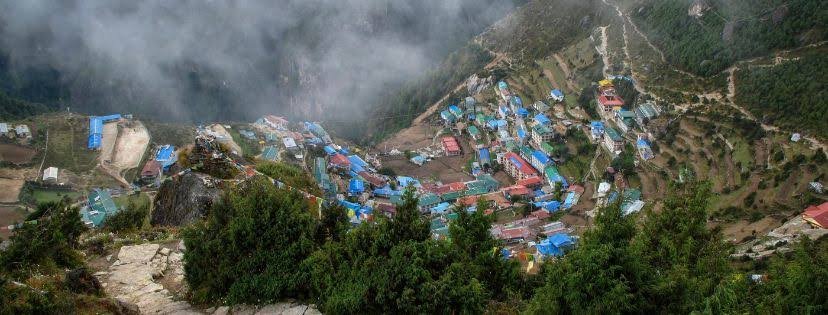
Wake up to stunning views of the majestic Himalayan peaks and enjoy a hearty breakfast. Today, we will stay in Namche Bazaar to allow our bodies to acclimatize to the high altitude. Use this day to explore the vibrant surroundings and experience the rich culture and warm hospitality of Nepal. Namche Bazaar is a bustling commercial hub, so if you need to do any last-minute shopping for your trek, this is the perfect place. The market is lively, with a variety of shops, restaurants, and coffee shops to enjoy.
A popular activity is a short hike to the Sagarmatha National Park headquarters, which offers panoramic views of Ama Dablam, Mt. Everest, and other stunning Khumbu peaks. Nearby, the Sherpa Cultural Museum provides fascinating insights into the history of the Himalayas, mountaineering achievements, and the unique flora and fauna of the region. The museum displays photos and maps from Tenzing Norgay and Edmund Hillary’s historic climb and shares the cultural heritage of the Sherpa people.
In the evening, take an acclimatization walk around Namche Bazaar. This helps your body adjust to the higher altitudes while you immerse yourself in the local Nepalese Buddhist culture, food, and traditions. Namche Bazaar, once a key trading point where Tibetan salt was exchanged for grain from the lowlands of Nepal, now hosts a thriving market selling items like rugs, clothing, dried meat, and salt. You’ll also find a range of locally made handicrafts, perfect as souvenirs or gifts for loved ones.
You’ll spend the night at a cozy guesthouse in Namche Bazaar, resting up for the trek ahead.
- Altitude: 3,850 m / 12,650 ft
- Altitude Gain: 400 m / 1,350 ft
- Trek Distance: 11 km | 5 – 6 hrs
- Trail Overview: Mixed ascent to Phunki Tenga, steep climb from Phunki Tenga to Tengboche
- Highlights: Tengboche Monastery, scenic views, Himalayan wildlife, cultural experiences
Start your day with a hearty breakfast and gear up for the trek from Namche Bazaar to Tengboche. This 11 km route is filled with breathtaking Himalayan views and opportunities to spot wildlife native to the region.
The trek begins with a steady path that offers spectacular bird’s-eye views of the Dudh Koshi River and panoramic sights of iconic peaks like Thamserku (6,608 m), Kantega (6,782 m), Ama Dablam (6,812 m), Lhotse (8,516 m), and Everest (8,849 m). After a 20-minute walk, you’ll reach the top of Namche Bazaar, followed by a descent to Khumjung, a traditional Sherpa village. From there, the trail climbs through stone steps and branches off the main Everest Highway at Sanasa, where you’ll enjoy glimpses of Lhotse, Nuptse, and Everest—among the best views of these peaks until you reach Gorakshep and Kala Patthar.
Two hours of pleasant trekking brings you to Sanasa, a forested section rich with oak and rhododendrons that offers excellent birdwatching. Look out for the Danphe Pheasant, Nepal’s national bird, as well as musk deer and Himalayan Tahr. From here, you’ll also catch sight of Tengboche Monastery, which awaits at the end of the trek.
The trail continues with a gradual descent to Phunki Tenga, a small village at 3,250 m featuring teahouses and an army post. The path down can be rocky and uneven, so proceed with caution. Crossing a high suspension bridge over the Imja Tse River, you’ll arrive at a checkpoint where your trekking permits will be checked.
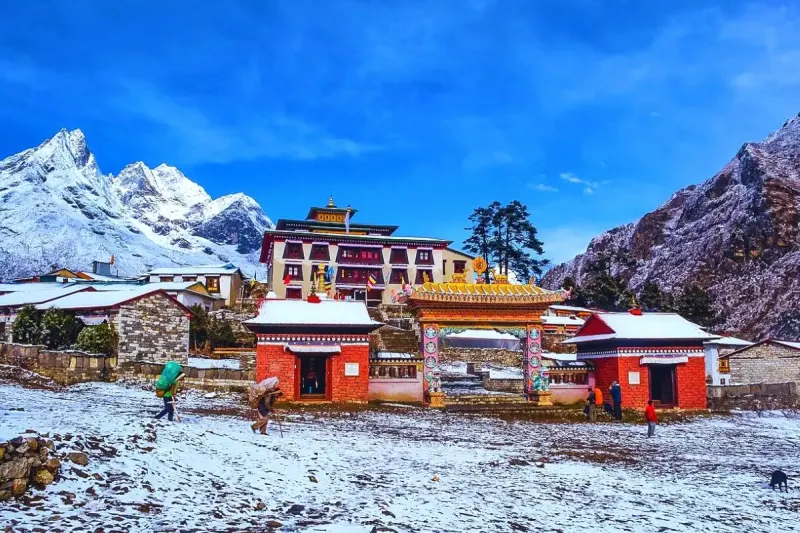
From Phunki Tenga, the final leg is a strenuous uphill climb that takes about an hour. This part of the trail, with its rocky terrain and switchbacks, demands a slow and steady approach. Soon, you’ll reach a Buddhist monastery just before entering the village of Tengboche.
Tengboche is famous for its Dawa Choling Gompa, the largest monastery in the Khumbu region, surrounded by spectacular mountain scenery. Daily prayers are held at 7:00 am and 3:30 pm, and participating in one of these sessions can provide a profound cultural experience. This serene place of worship is a must-visit highlight of the Everest Base Camp Trek. Your night will be spent in a guesthouse at Tengboche, where you can rest and take in the peaceful atmosphere.
- Altitude: 4,350 m / 14,250 ft
- Altitude Gain: 500 m / 1,600 ft
- Trek Distance: 12 km | 6-7 hrs
Today’s trek from Tengboche to Dingboche offers a mix of gradual descents and slight ascents after crossing the Lobuche River. The trail winds through lush forests of birch, conifer, and rhododendron trees, providing breathtaking views of the towering Ama Dablam along the way.
Starting from Tengboche, you will cross several bridges and rivers while enjoying spectacular mountain vistas. The initial part of the trail passes through the serene village of Deboche, followed by stone steps that lead you into the alpine meadows of Dingboche. Dingboche is the only area in the Khumbu region where barley is grown, and from here, you can catch magnificent views of the surrounding peaks.
The trek continues as you head towards Pangboche Village, where you can marvel at Ama Dablam in all its glory. From Pangboche, the trail ascends to Pheriche, before following the beautiful Imja River through the Imja Valley. As you approach Dingboche, the landscape becomes more rugged, and the temperature begins to drop with higher altitude.
Throughout the journey, you’ll encounter stone walls with Tibetan prayer flags, small streams, and several rivers that you’ll cross before reaching Dingboche. The path is generally moderate in difficulty, with gradual uphill stretches, although some steep sections may challenge you. You’ll be rewarded with ever-improving views of the Himalayas, including Lhotse, Nuptse, and, of course, Ama Dablam, which dominates the skyline.
Upon reaching Dingboche, you’ll see small agricultural fields surrounded by stone walls that protect crops from the harsh winds. This peaceful village marks the end of today’s trek. We will check into a guesthouse for the night and rest, preparing for the adventure ahead.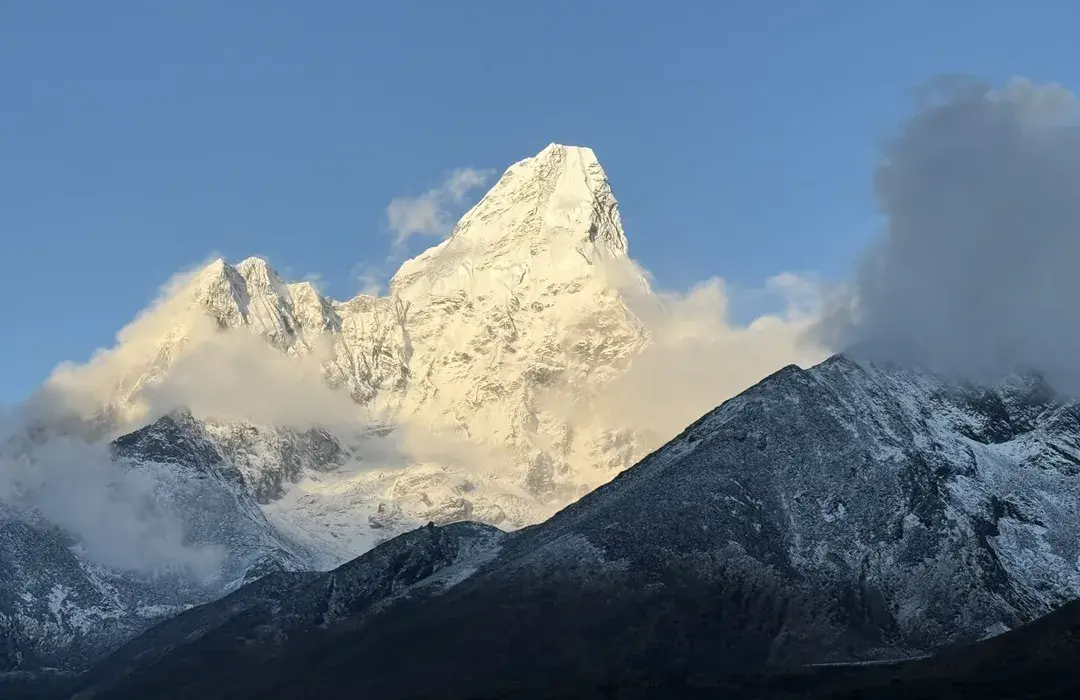
Today is a rest day in Dingboche, allowing your body to adjust to the high altitude. Acclimatization is essential as we ascend to higher elevations, where the oxygen levels decrease. Continuing to gain elevation without adequate rest can lead to altitude sickness, with symptoms like dizziness, nausea, headaches, and in more severe cases, conditions like cerebral or pulmonary edema. To prevent such issues, we start our acclimatization process at around 11,500 ft, with Namche Bazaar being one of the initial spots for this adjustment.
For acclimatization today, you can take a leisurely walk around Dingboche village. The village is dotted with farms and fields where native crops such as barley, potatoes, and buckwheat are grown. You can also embark on a short hike to Chukung, which lies in the Imjatse Valley to the east. This 3-5 hour trek takes you to an altitude of 4,730 m and offers some magnificent views of the surrounding peaks.
Though the trail is gradual, the thinning air becomes noticeable as you climb higher. Chukung has a few teahouses where you can stop for a break while taking in the stunning views. The journey up offers some breathtaking panoramas, and as you continue to gain elevation, the scenery becomes even more impressive.
After exploring the valley and surrounding areas, you’ll return to your guesthouse in Dingboche. This hike will help your body adjust to the higher altitude, ensuring you’re better prepared for the next stages of your trek.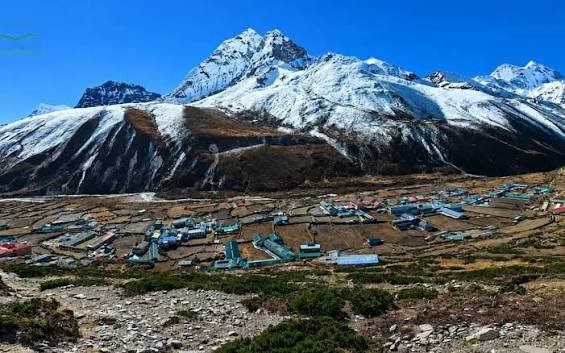
- Altitude: 4,950 m/16,200 ft
- Trek Distance: 6 km | Duration: 4-5 hrs
- Altitude Gain: 600 m/1,950 ft
- Terrain: Tricky climb over moraine and rocky paths, passing memorials.
Today, we will trek from Dingboche to Lobuche, passing through alpine pastures where yaks graze during the summer months. The trail leads towards the end of the Khumbu Glacier moraine, offering breathtaking views of Mt. Nuptse (7,861 m). As you walk along the moraine, you’ll notice stone monuments dedicated to Sherpas who tragically lost their lives in an avalanche, as well as memorials for other climbers who perished on Mt. Everest.
The trek begins with a gradual climb, leading towards the small ridge behind Dingboche. From here, you’ll see Lobuche Peak (6,119 m) to the north and the snowy expanse of the Cho La. Continuing along the trail, you’ll cross the Khumbu Khola and walk over the massive glacier moraines of the Khumbu Glacier, which flows from Everest. After passing the memorial cairns, you’ll follow the valley stream to reach Lobuche by early afternoon.
The hike is about 6 hours in total, covering 7 km, with the most challenging part coming after the village of Thukla. From here, the path becomes steeper as you ascend to Thukla Pass. The climb to Lobuche is tough, especially as you reach the Everest Memorial, marking the spot where many mountaineers and Sherpas have fallen. The air grows thinner, and the temperature starts to drop as you continue your ascent.
At Lobuche, the view of Mt. Nuptse is stunning, especially at sunset, when the peak is bathed in golden light. The village itself is small with only a few teahouses, offering a peaceful place to rest before continuing towards Everest Base Camp. We will stay the night in Lobuche, preparing for the final stretch to our destination tomorrow.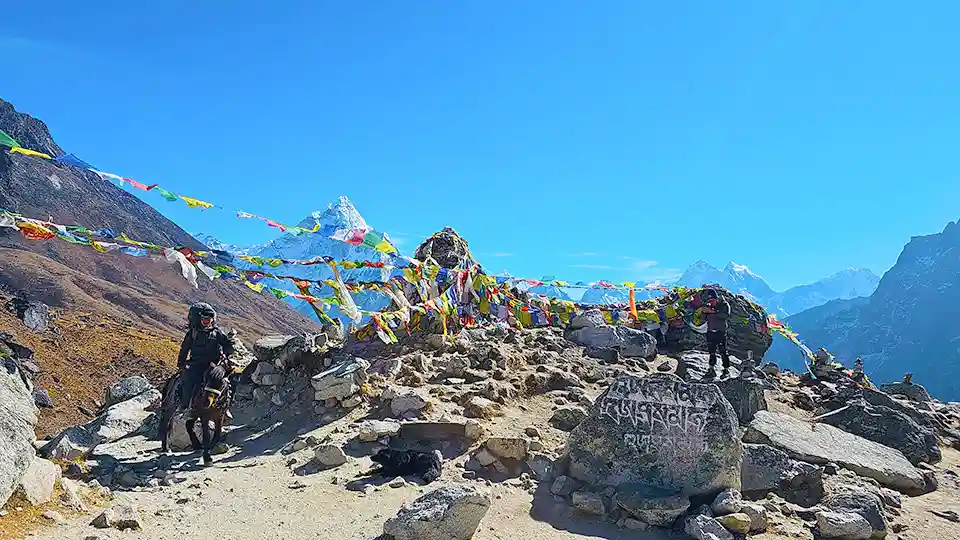
- Altitude:Gorakshep: 5,150 m/16,900 ft
- Everest Base Camp: 5,350 m/17,700 ft
- Altitude Gain: 200 m/800 ft
- Distance:Lobuche to Gorakshep: 6 km | 3-4 hrs
- Gorakshep to Everest Base Camp: 3 km each way | 3 hrs
Today is the most thrilling day of your trek as you set foot at Everest Base Camp. After an early breakfast at Lobuche, we begin our trek towards Gorakshep, the last settlement on the trail. The path leads through narrow gaps in the mountains and along the rugged moraine of the Khumbu Glacier, taking approximately 3-4 hours to cover the 6 km distance.
Upon reaching Gorakshep, enjoy lunch and take a well-deserved rest. Then, we begin the second part of the journey: the 3 km trek to Everest Base Camp itself. Although the trail is not too difficult, it can be a little tricky in some parts with rocky and sandy stretches. As you approach Base Camp, you’ll get amazing views of the Khumbu Icefall and the towering peaks surrounding the region, including Nuptse, Khumbutse, and Pumori. Be cautious as you navigate the rocky terrain and enjoy the beauty of the place while proceeding to the iconic Everest Base Camp rock, marked by a flurry of colorful prayer flags.
After celebrating your accomplishment and soaking in the incredible views, we’ll head back to Gorakshep, retracing the trail. Overnight, you will rest at Gorakshep.
Note: Drinking water in Gorakshep is available for purchase, but can be quite expensive. A good option is to buy water purification tablets in Kathmandu or Pokhara and treat the water on the way. Most trekking groups are not allowed to enter the actual Everest Base Camp, so the area you visit is considered a “trekker’s base camp.”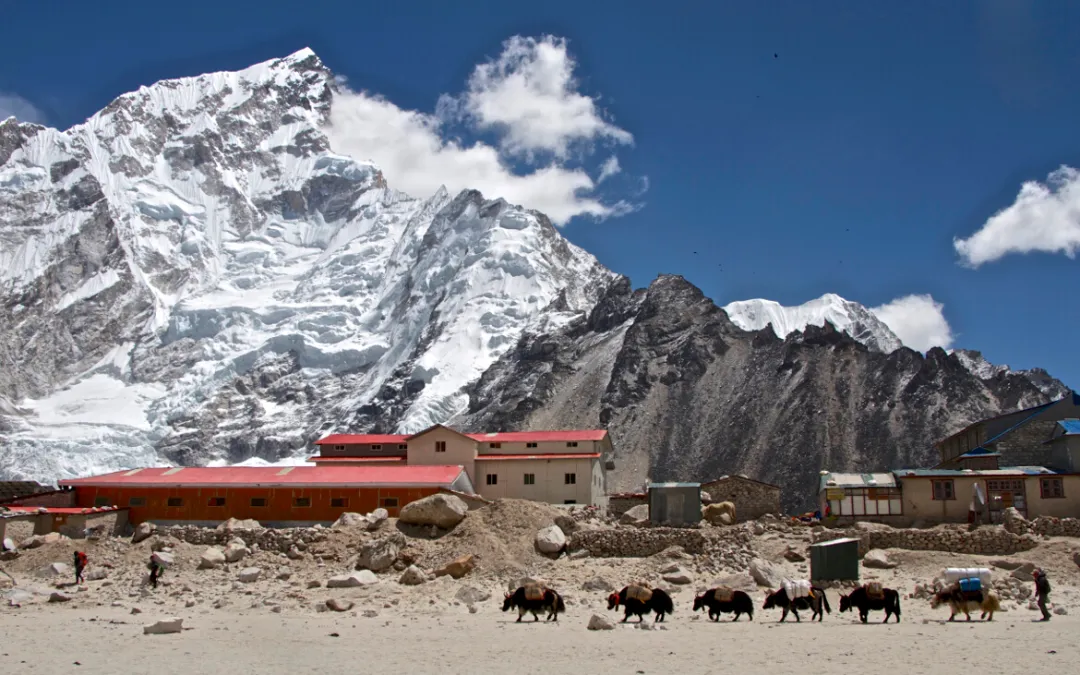
Altitude:
- Kalapatthar: 5,550 m (18,200 ft)
- Pangboche: 4,000 m (13,100 ft)
Distance & Duration
- Gorakshep to Kalapatthar: 2 km each way, 3-4 hours round trip
- Gorakshep to Pangboche: 19 km, approximately 7-8 hours
- Altitude Loss: 1,150 m (3,800 ft)
- Trail Characteristics: Steep climb to Kalapatthar (challenging)Gradual descent to Pangboche
Trek Details:
Starting from Gorakshep, embark on the ascent to Kalapatthar in the early morning to take advantage of clear skies before the clouds roll in. The initial portion of the trek involves a walk across sandy plains before transitioning into a steep, demanding 45-minute climb. After this, the trail evens out, providing a gentler walk for about an hour. The final approach to Kalapatthar involves another steep 30-minute climb. As you climb, Mt. Everest gradually becomes more prominent, offering increasingly breathtaking views. This section of the trail is rocky and can be challenging, so proceed carefully.
At the summit, marked by Sherpa prayer flags and a weather station, you’ll be rewarded with panoramic views of the Sagarmatha National Park. The highlights include a close view of Mt. Everest, the Khumbu Icefall and Glacier, Lhotse, Makalu, and other towering peaks. After taking in the scenery, descend back to Gorakshep for breakfast and a brief rest.
Descent to Pangboche:
Following a well-deserved meal at Gorakshep, begin the descent to Pangboche. The initial part of the route retraces your steps alongside the Khumbu Glacier, passing through Lobuche, where you can take a break for snacks. Continuing down, the path splits at an intersection: the left path leads to Pangboche, while the right diverges toward Dzonghla, Cho La Pass, and Gokyo Ri.
Stay left and prepare for another tricky section as you descend the moraine wall of the Khumbu Glacier to Thukla Pass. After passing through the Everest Memorials, a careful descent leads to the river below. From here, the trek becomes more manageable, and soon you’ll reach Pangboche, where you’ll check into a teahouse, enjoy dinner, and rest for the night.
Additional Notes:
- If you choose, you can take the lower path toward Pheriche after Thukla instead of the higher trail to Dingboche.
- Pangboche serves as a perfect stop before heading to Namche Bazaar the following day.

- Altitude: 3,450 m (11,300 ft)
- Distance & Duration: 14 km, approximately 6-7 hours
- Altitude Loss: 550 m (1,800 ft)
Trek Details:
Start your day early to make the most of the long journey ahead. Begin by descending from your starting point, making your way through the village and crossing the river. Following this, the trail climbs back up the valley wall, where you can take a break to rest and enjoy the scenery.
Once you resume, continue your descent along the winding path that leads to a suspension bridge. After crossing the bridge, prepare for a steady 2 km incline along the valley wall. This section becomes more forested as you climb, providing some shade and a change in scenery. Once you complete the uphill stretch, the path evens out for the final 5 km, offering a smoother walk toward Namche Bazaar.
This section of the trail is carved into the valley wall, with the river running below, adding to the picturesque views. As the path bends inward, the vibrant village of Namche Bazaar comes into sight. Descend into the village, check into a teahouse, and rest well after a long day of trekking. With this, the most challenging part of your Everest Base Camp trek is behind you, and only one more day remains before the journey concludes.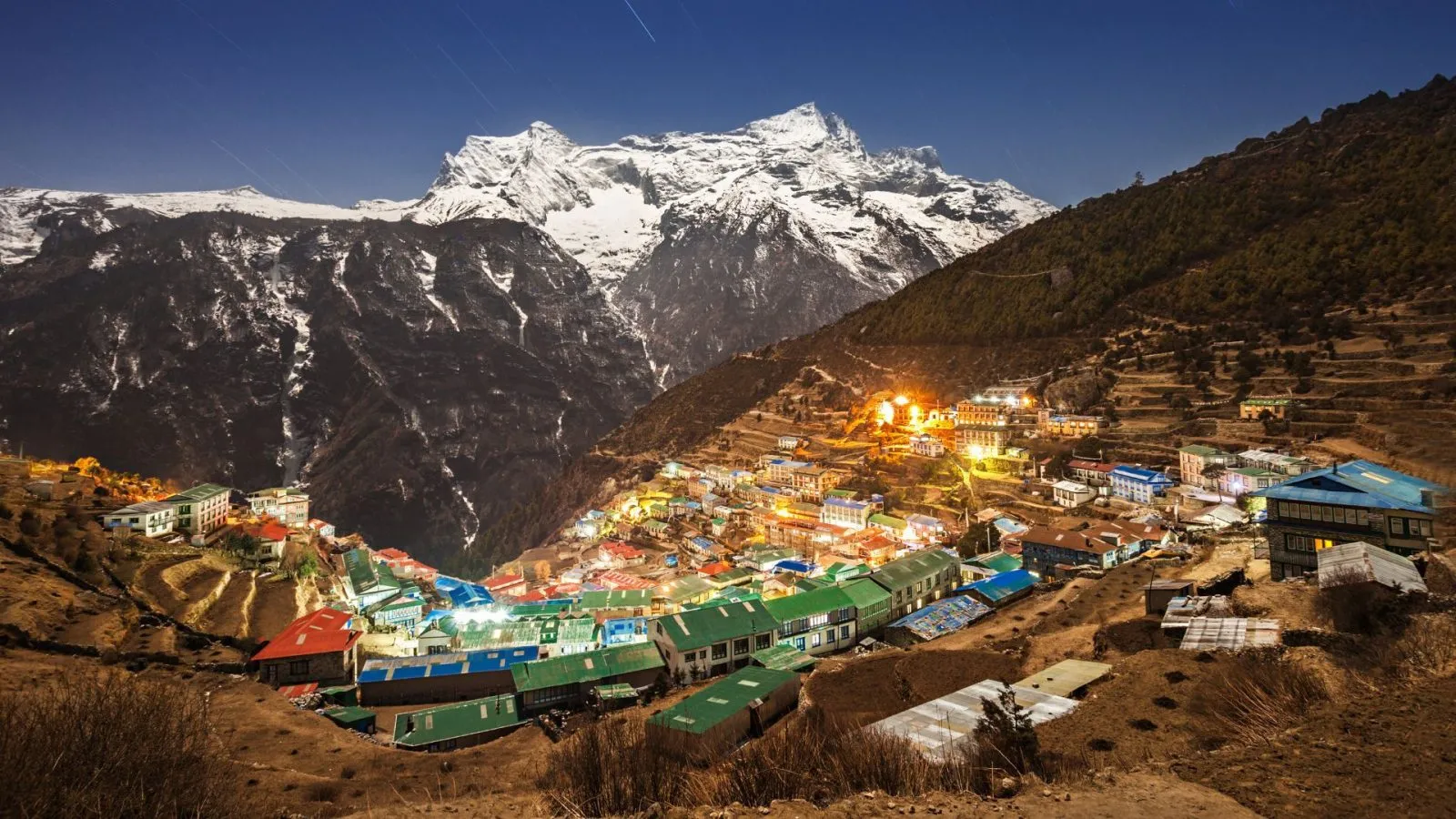
Altitude:
- Phakding: 2,600 m (8,500 ft)
- Lukla: 2,850 m (9,350 ft)
- Altitude Loss: 600 m (1,950 ft)
- Distance & Duration: 16 km, approximately 7-8 hours
- Trail Characteristics: Moderate, continuous descent to Phakding, followed by a gradual ascent to Lukla
Trek Details:
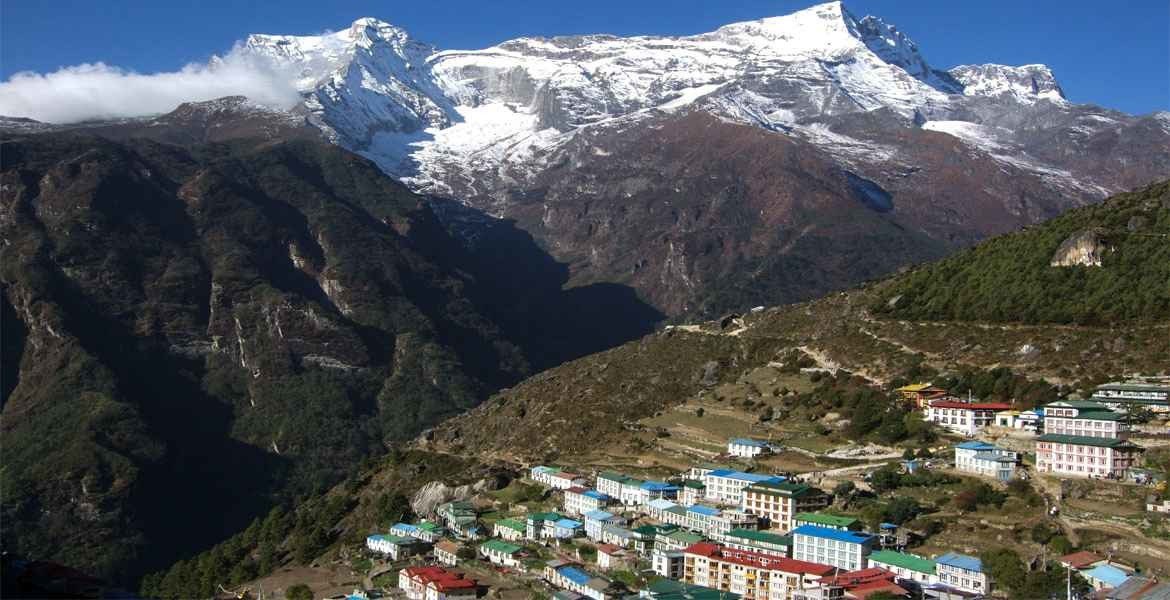
Begin your day in Namche Bazaar with its refreshing mountain air and bustling market atmosphere. Take some time in the morning to explore the town, pick up unique souvenirs, and enjoy a last look at the Khumbu region’s largest trading hub. You might also take a leisurely walk around Sagarmatha National Park and savor the local cuisine before setting off.
Start your trek early, as the route to Lukla is long. The initial segment involves a steady descent from Namche Bazaar to Phakding. The trail winds through lush green forests, with the distant mountains and cascading waterfalls adding to the scenery. Despite a few uphill sections, the overall path is easy to manage, and the beautiful landscape helps to ease the trek.
After about 45 minutes of descending, you will reach a familiar rest stop where you can catch your last glimpse of Mt. Everest. Beyond this point, mountain views become scarce, peeking only occasionally from behind the forest cover. The trail includes crossing suspension bridges and following the river as the steep descent transitions into a gentler one.
Arriving in Phakding, stop for a well-earned lunch and a short rest. The trek resumes with a descent along the valley, offering views of riverbanks, mountain ridges, and traditional suspension bridges. You will pass through several small villages and traverse stair sections and gradual inclines as you approach Lukla.
The final stretch involves a moderate ascent. Upon reaching Lukla, check into your teahouse and spend your last evening with your Sherpa guides and trekking team. Celebrate the journey with a hearty meal and drinks, cherishing the memories of your trek to Everest Base Camp.
Morning Flight to Kathmandu Overview:
With your trek to Everest Base Camp completed, the final leg of your adventure awaits with a morning flight to Kathmandu. Hotel accommodation in Kathmandu is included in your package. Be aware that flight delays or cancellations are possible due to weather, so it’s recommended to have 3-4 buffer days planned.
Details for the Day:
Prepare for an early start, as flights from Lukla to Kathmandu are generally scheduled in the morning when weather conditions are more favorable. Daytime flights often face challenges due to stronger winds, so early flights are preferred. However, even morning departures can be subject to delays if weather conditions are not suitable.
After passing through security at Lukla airport, take in the breathtaking aerial views of the Himalayas as your flight takes off. Upon landing at Ramechhap Airport, you will be driven back to Kathmandu. Enjoy an overnight stay at a hotel, included in your package.
Spend the remainder of your day exploring Kathmandu, reflecting on your journey, or preparing for your onward travels. If you’re continuing to another destination, make any necessary arrangements. We wish you safe travels home, filled with memories of your Everest adventure..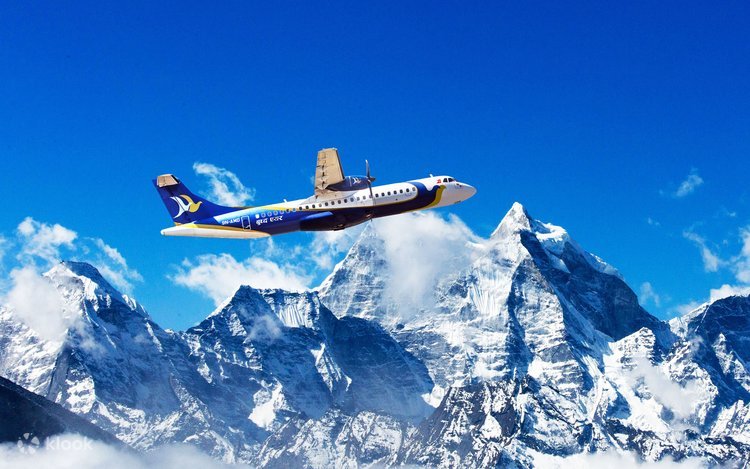
Who Can Participate
- Age: 15 years
- Experience of any high altitude trek, at least 1 treks of 4,000m/13,100ft.
- The climber must be fit and have sufficient stamina to cover 5 km of distance in 30 min or 10km in 60-70 min without stress.
- The climber should be able to carry a 12-13 kg backpack.
- Pulse rate at rest must be in between (60 to 90 beats per minute).
- Blood Pressure Reading must be in between (DIASTOLIC 70 – 90, SYSTOLIC 100 – 140 mm Hg).
- Respiratory rate at rest must be in between (12 to 20 breaths per minute).
- Should not have Liver and kidney issues.
- Should not have Diabetes Mellitus, Bronchial Asthma, Heart problems, Hypertension, etc.
- No pacemaker implant.
- People with Sinus issues, Epilepsy please contact to trek coordinator before booking the trek.
- If your BMI is not normal, Please contact our Trek coordinator before Trek booking.
- Junior trekkers (below 15 years) should have a company of parents/guardians.
- Trekkers between 15 to 18 years can come solo with the disclaimer form signed by parent/guardian.
Pick-Up Information:
All participants must arrive in Kathmandu by 1:00 pm. Upon booking your trek, detailed information including the name and location of the Kathmandu hotel and the contact person’s number will be provided by your trek coordinator.
Options to Reach Kathmandu:
- By Air: The most convenient way to reach Kathmandu is by flying into Tribhuvan International Airport, which is serviced by airlines from Southeast Asia and Europe. Direct flights are available from major Indian cities such as Delhi, Mumbai, Kolkata, Bangalore, and Varanasi. Regular operators include Jet Airways, Air India, IndiGo, and Nepal Airlines.
- By Train and Bus (Delhi to Kathmandu)
Day 1: Take a train from Delhi to Gorakhpur. The Vaishali Express departs Delhi at approximately 19:45 and arrives at Gorakhpur Junction at 09:10 the next morning. Alternatively, there is a train departing New Delhi at 17:20, arriving at 06:35 the following day. Fare varies from Rs. 2440 (£35 or $54) in AC1, Rs. 1240 (£18 or $27) in AC2, Rs. 785 (£12 or $18) in AC3, to Rs. 315 in Sleeper Class. Check current times and fares on www.indianrail.gov.in or www.irctc.co.in.
Day 2: From Gorakhpur, take a bus or jeep to the border at Sunauli (India) and Bhairawa (Nepal), which takes about 3 hours and costs approximately Rs. 55 (£1 or $2).
– Walk across the border and proceed to the Bhairawa bus station. Buses or jeeps to Kathmandu take 9 to 12 hours and cost around 120 Nepalese Rupees or 230 Indian Rupees (£1 or $2). Buses run throughout the day until 11:00 am, with overnight options departing between 16:00 and 19:00. Indian Rupees are accepted in Bhairawa but may not be elsewhere in Nepal.Alternative Route: Travel via Varanasi, with an overnight train connecting Delhi and Varanasi, followed by buses to the Nepalese border.
Drop-Off Information:
For your return from Kathmandu, you can choose between road or air transport options. Note that our service includes only the hotel stay, with the standard check-out time being 11:00 am.
Cost Terms
- Day 1 and Day 13: Hotel accommodation in a 3-star hotel in Kathmandu with bed and breakfast.
- Day 2 to Day 12: Accommodation in teahouses along the trek.
2. Meals (Veg + Egg):
- All meals from Day 2 lunch to Day 13 breakfast, starting and ending in Lukla, are included.
- Fresh fruit will be provided after dinner each evening.
3.Support:
- A versatile base camp manager oversees communication and deploys additional manpower during emergencies.
- A professional trek leader, qualified in mountaineering and first aid, leads the group.
- Local, experienced guides are provided based on the group size.
- Adequate support staff are available throughout the trek.
4. Trek equipment:
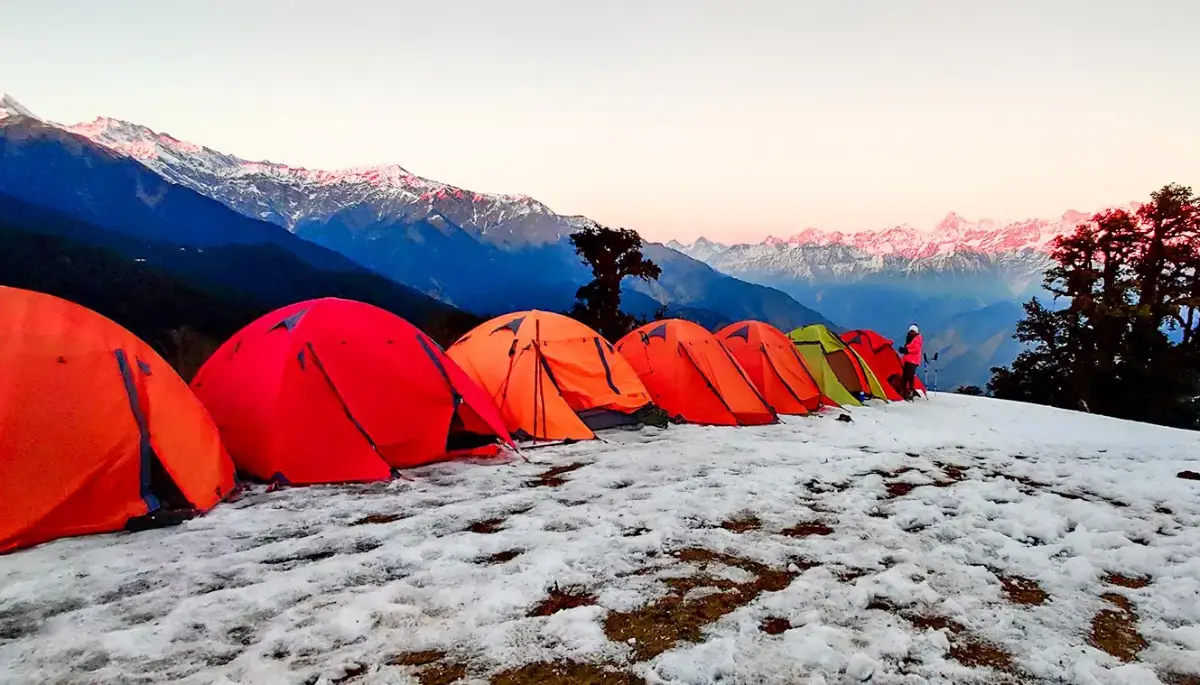
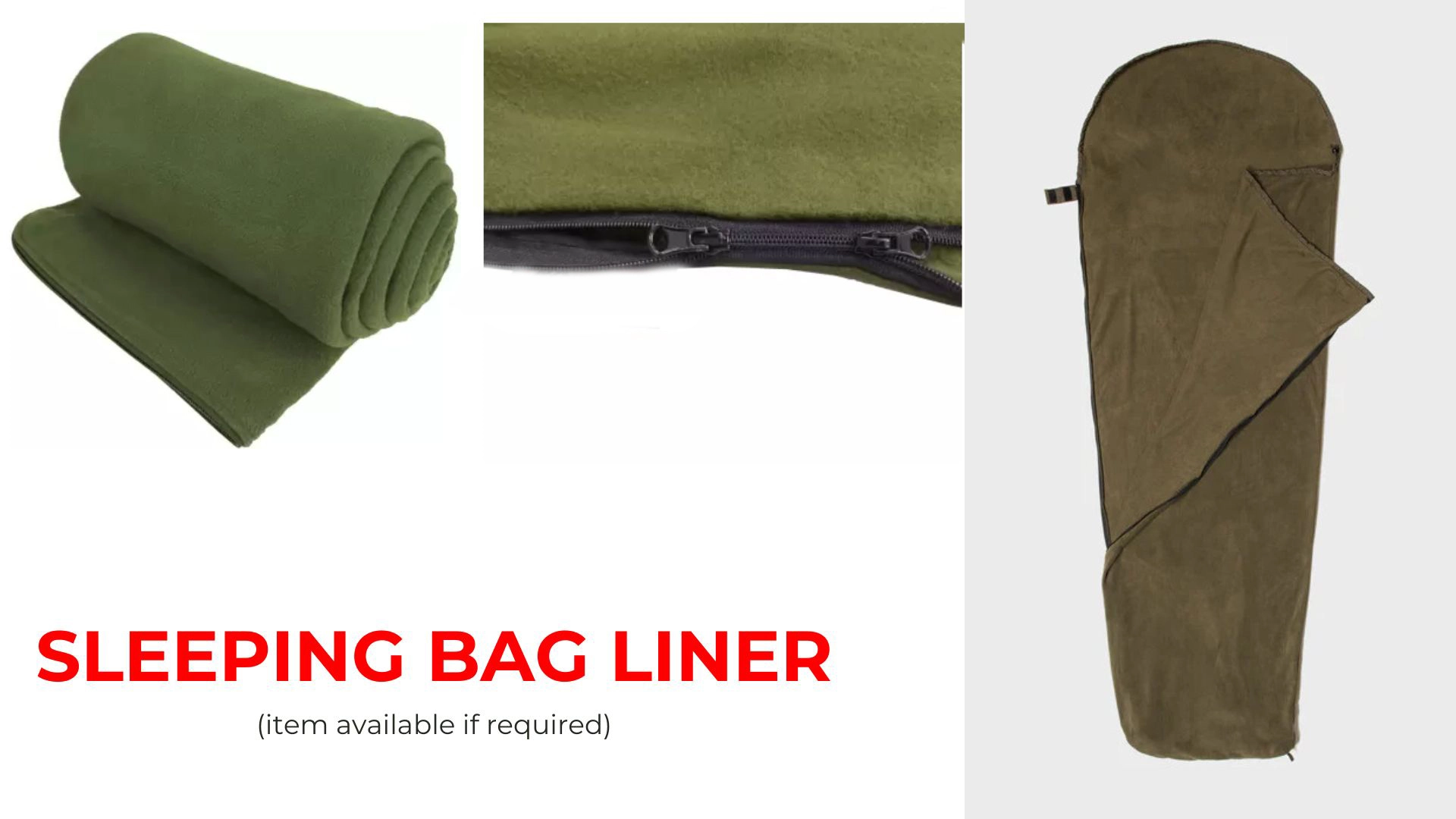
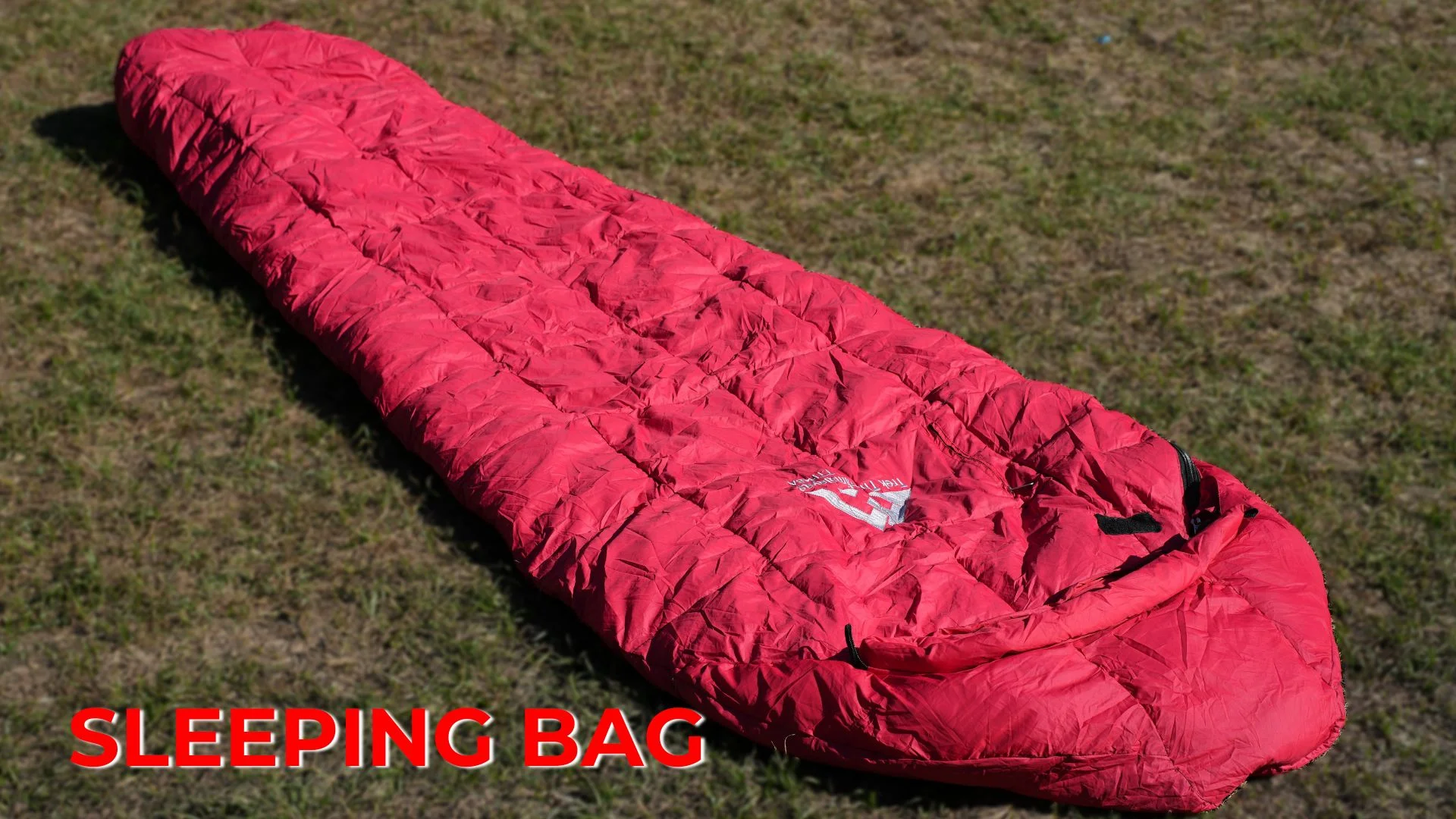
- Sleeping bag.
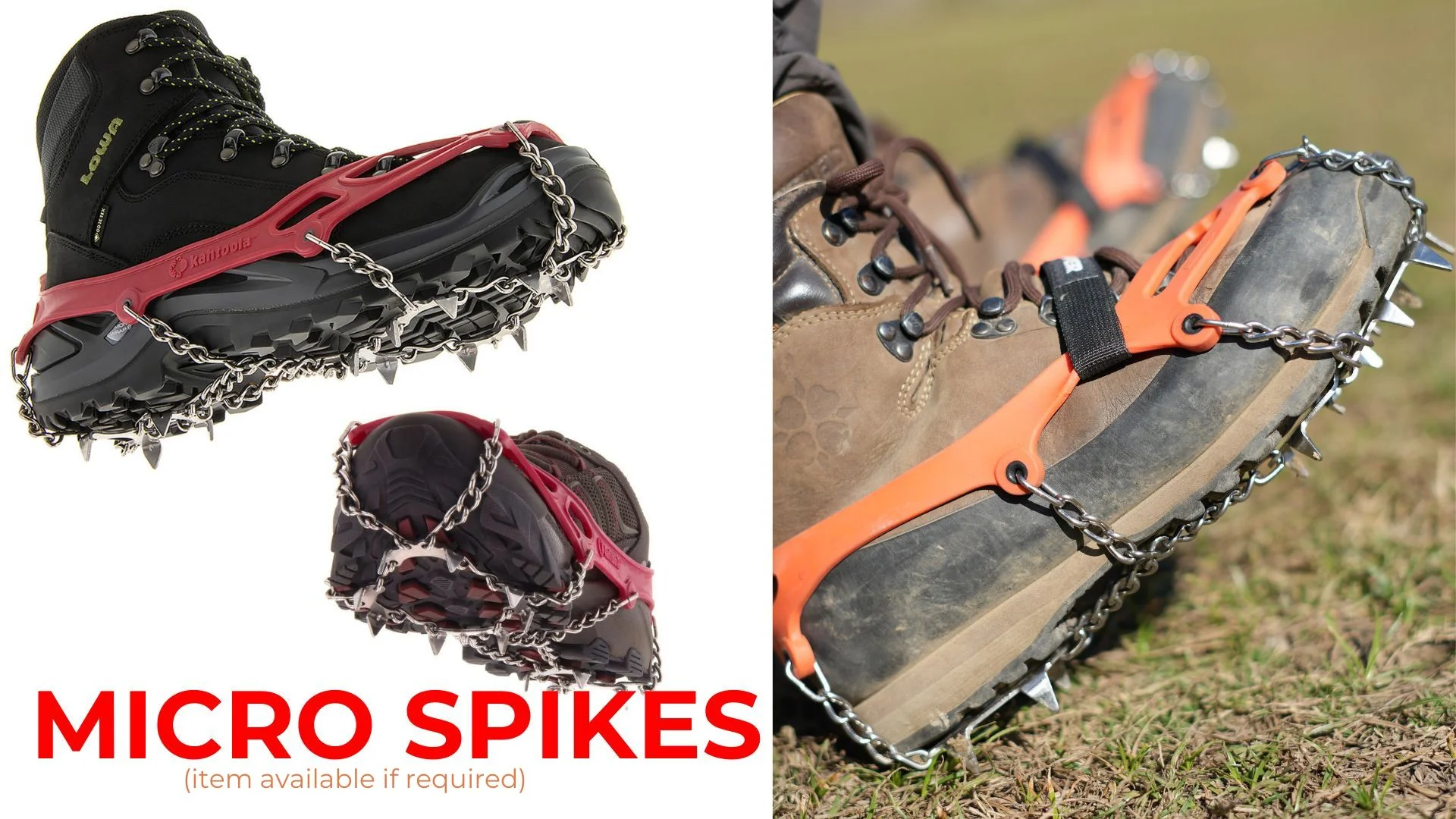
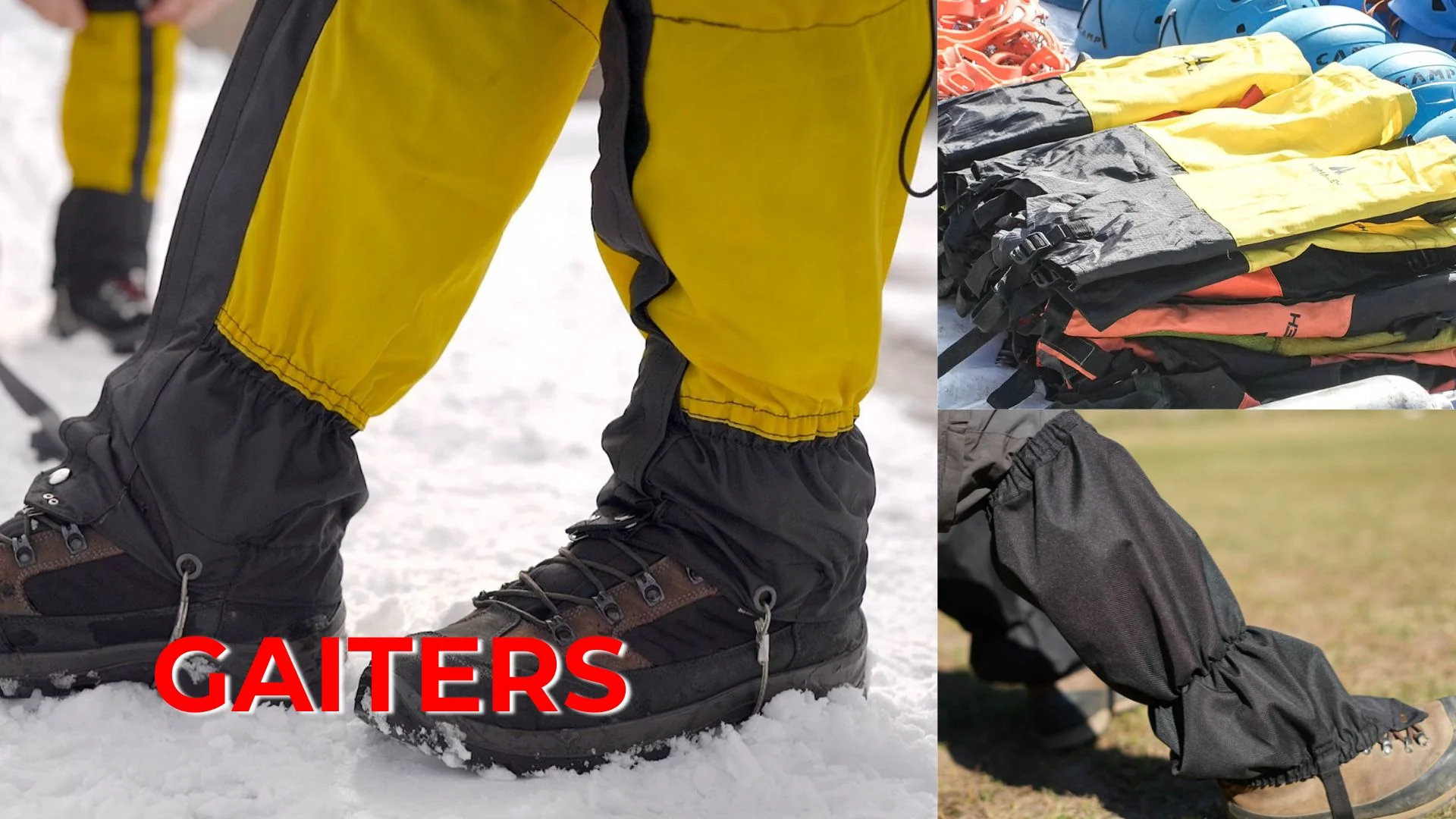
- Gaiters & Crampon (if required).
5.First aid:
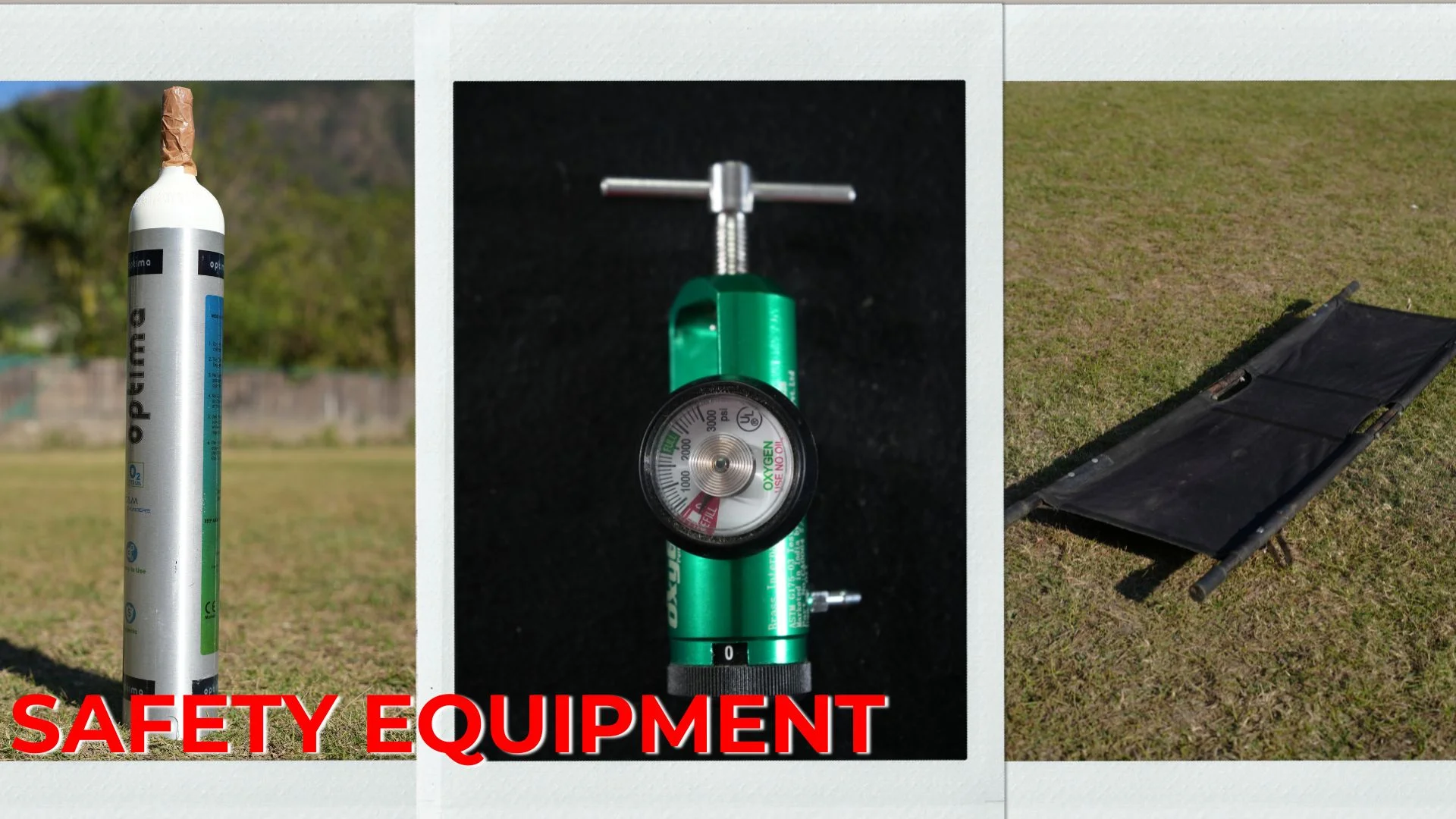
- Medical kit, stretcher, oxygen cylinder, blood pressure monitor, oximeter, and stethoscope.
6. Transportation (as per the itinerary):
- Arrival and departure airport transfers as per the itinerary.
- Domestic airport transfers to and from Lukla.
- Kathmandu to Ramecchap/Lukla and return transfers.
7. Clock room facility at the base camp for storing additional luggage.
8. All necessary permits and entry fees, as per the charges for Indian nationals.
9. Services provided from Kathmandu to Kathmandu.
10. TIMS card.
11. Everest Base Camp map.
12. Farewell dinner in Kathmandu.
13. Trek completion certificate.
14. Complimentary trekking kit bag (duffle bag provided if porter service is opted).
1. Insurance is Mandatory.
2. Food during the transit.
3. Any kind of personal expenses.
4. Mule or porter to carry personal luggage.
5. Emergency evacuation, hospitalization charge or etc.
6. Anything not specifically mentioned under the head Inclusion.
7. Transportation (Dehradun to Natin village and return, if not booked with us).
Things can be provided on demand and availability (participant has to pay extra for these things).
1- Satellite phone/set phone – is a type of mobile phone that connects via radio links via satellites orbiting the Earth instead of terrestrial cell sites like cellphones. Therefore, they can operate in most geographic locations on the Earth’s surface.
2- Gamow/PAC HAPO Bag (Portable Hyperbaric Bag) – is a unique, portable hyperbaric chamber for the treatment of acute mountain sickness (AMS), also known as altitude sickness.
3- AEDs (Automated External Defibrillators) – are portable life-saving devices designed to treat people experiencing sudden cardiac arrest, a medical condition in which the heart stops beating suddenly and unexpectedly.
Cancellation terms:
Cancellations prior to 25 days from the start of the Trip
Refund options
- 5% deduction on the trek fee.
- 100% cash voucher for any trip within one year.
- Transfer your trek (any trek, any date) to a friend.
Cancellation between 24 days and 15 days to the start of the Trip
Refund options
- 30% deduction on the trek fee.
- 100% cash voucher for the same trip within one year.
- 85% cash voucher for any trip within one year.
- Transfer your trek (same trek, any date) to a friend.
Cancellation between 14 days and 10 days to the start of the Trip
Refund options
- 50% discount on the trek fee
- 80% cash voucher for the same trek, valid for up to one year
- 70% cash voucher for any trek, valid for up to one year
- Book the same trek in the same season with any other batch
- Transfer your trek (same trek, any date) to a friend
Cancellation less than 9 days to the start of the trek
Refund options
- No cash refunds.
- Receive a 20% cash voucher for the same trip, valid for up to one year.
- Get a 10% cash voucher for any trip, valid for up to one year.
- Transfer your trek to a friend (same trek, same date).
Note:
If a booking is made using a voucher or discount code, the policies related to vouchers and discounts cannot be modified.In the unlikely event that Adventure Rishikesh Indiacancels a trek prior to the scheduled departure date:
While it is extremely rare for Adventure Rishikesh India to cancel a trek, we understand that unforeseen circumstances or natural disasters may occasionally require us to do so before the scheduled departure. These circumstances could include continuous rain or snow, thunderstorms, snowstorms, landslides, floods, earthquakes, or any other natural calamity that poses a risk to the safety of our trekkers. Additionally, unforeseeable events such as local riots, curfews, pandemics, lockdowns, government orders, or any similar situations that compromise the safety of the trekking experience may also necessitate a cancellation.In the event of such a cancellation, we will provide you with a voucher equivalent to the amount you paid for the trek. This voucher can be redeemed for any of our treks within the next year, allowing you to still enjoy an adventure with us at a later date.
Note:
The issuance of a voucher is not applicable in situations where you are required to descend from the trek for any reason. The trek leader may make the decision to send you down from the trek due to factors such as insufficient fitness level, symptoms of Acute Mountain Sickness (AMS), high blood pressure, exceeding the designated turn-around-time, health concerns, or if you are found smoking, drinking, or violating the rules set for the trek. In such cases, the provision of a voucher does not apply.In the rare event that Adventure Rishikesh India shifts a trek:
Weather conditions in high-altitude areas are highly unpredictable and can change suddenly at any time. Additionally, circumstances beyond our control, such as natural disasters, political unrest, pandemics, and lockdowns, may impact the feasibility of conducting a trek. In cases where we are unable to proceed with an event due to such circumstances, we will make every effort to provide you with an alternative trek that is safer and more suitable.In these cases, we will issue a voucher to offset the cost difference between the originally scheduled trek and the alternative trek. This voucher can be redeemed at any time within one year from the date of issue. Please note that a refund fee or reimbursement of the cost difference is not applicable in these cases.
Note:
- Changing trek batches is dependent on seat availability in the new batch.
- If transferring a trek to a friend, they must meet all the mandatory requirements set by Adventure Rishikesh India.
- We reserve the right to change or cancel policies without prior notice.
- Cash refunds are only applicable for bookings made without using promotional codes or vouchers.
Cash Voucher Terms:
- This is a non-transferable voucher.
- The voucher cannot be combined with any other offers from Adventure Rishikesh India.
- The voucher is valid only for treks booked directly with Adventure Rishikesh India.
- To redeem the voucher, use your registered phone number or email address.
- All other terms of booking with Adventure Rishikesh India apply to the voucher.
- Adventure Rishikesh India reserves the right to modify any of these terms without prior notice.
Itineraries are based on information available at the time of planning and may change. Let’s Go UbEx reserves the right to alter expedition dates, participants, or itineraries as conditions warrant. If a trip is delayed or the itinerary changes due to bad weather, road conditions, transportation delays, government intervention, sickness, or other uncontrollable factors, the costs of delays or changes are the participant’s responsibility. Let’s Go UbEx reserves the right to accept or decline any individual as a trip member for any reason.
Trek Essentials
Personal Equipments
| Backpack with rain cover | (50 – 60 ltr) with comfortable shoulder straps |
| Day pack with rain cover | 20 – 30 ltr (If off-load opted) |
| Walking stick | Advisable (At least one) |
| Water Bottle / Hydration pack | 2 bottles of one liter each, People who use hydration pack 1 hydration pack and 1 bottle of one liter, Carry at least one thermos flask. |
| Small size tiffin/lunch box | 1 Nos |
| Snacks | Energy bars, dry fruits, electral/ors |
| Personal Medical Kit | Consult your doctor |
| T-Shirt (Synthetic quick dry) | 1 Full & 2 Half sleeves |
| Fleece T-shirt | 1 Nos |
| Wind stopper / Fleece jacket | 1 Nos |
| Windproof Jacket | 1 Nos |
| Down feather / Hollow jacket | 1 Nos |
| Thermal inner (Upper and Lower) | 1 Pair |
| Trek Pant (Synthetic quick dry) | 2 Nos |
| Wind stopper / Fleece Pant | 1 Nos |
| Waterproof gloves | 1 Pair |
| Fleece / woollen gloves | 1 Pair |
| Poncho / waterproof Jacket and pant | 1 Nos |
| Head torch | 1 Nos. (Avoid Hand torch) |
| Sun Cap | 1 Nos |
| Woolen cap | 1 Nos. |
| Balaclava | 1 Nos. |
| Buff / Neck-gaiters | 1 Synthetic & 1 Woollen |
| Sunglasses | UV with dark side cover, People who wear spectacles – (A)- Use contact lenses | (B)- Photo chromatic glasses |
| Trekking shoes | 1 Pair (Waterproof, high ankle, good grip) |
| Floaters / flip-flops | 1 Pair |
| Cotton socks | 6 pairs |
| Woollen socks | 1 pairs |
| Gaiters | 1 Pair (TTH provides when required) |
| Micro spikes | 1 Pair (TTH provides when required) |
| Sunscreen | 1 Nos |
| Moisturiser | 1 Nos |
| Chap-stick / Lip balm | 1 Nos |
| Toothbrush and toothpaste | 1 Nos |
| Toilet paper & Wipes | 1 Nos |
| Soap / hand sanitizers | 1 Nos |
| Antibacterial powder | 1 Nos |
| Quick dry towel | 1 Nos |
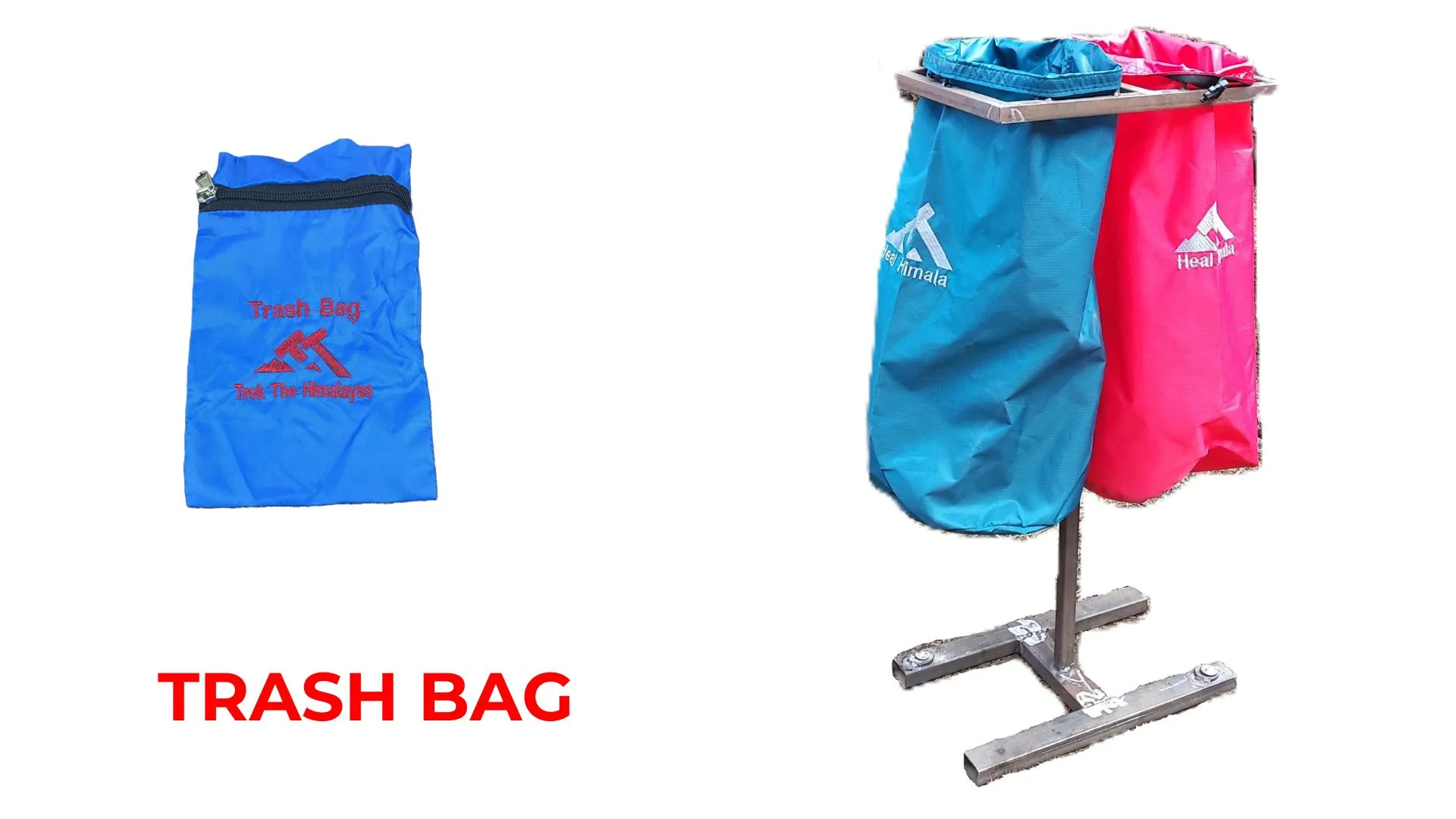
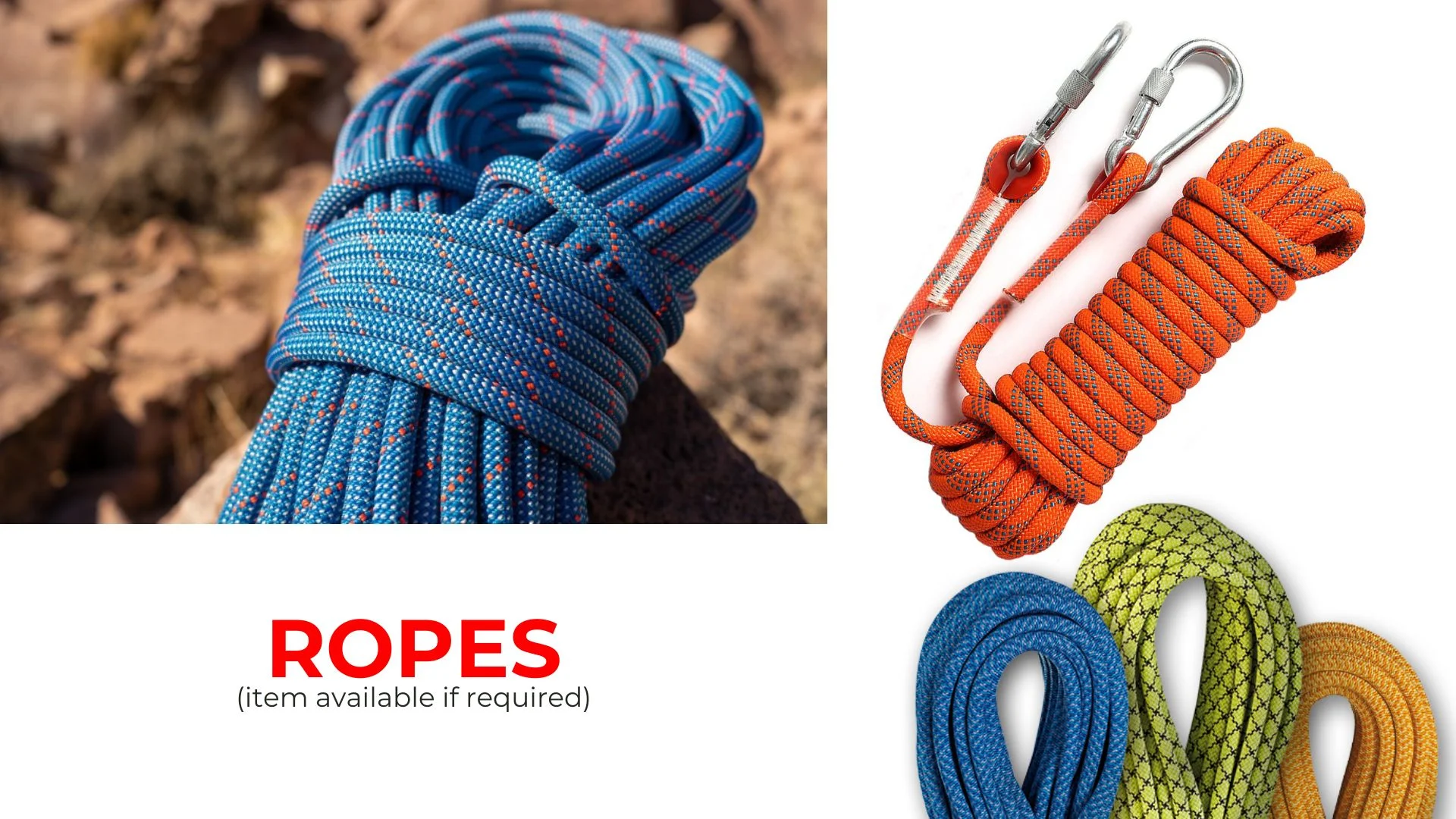
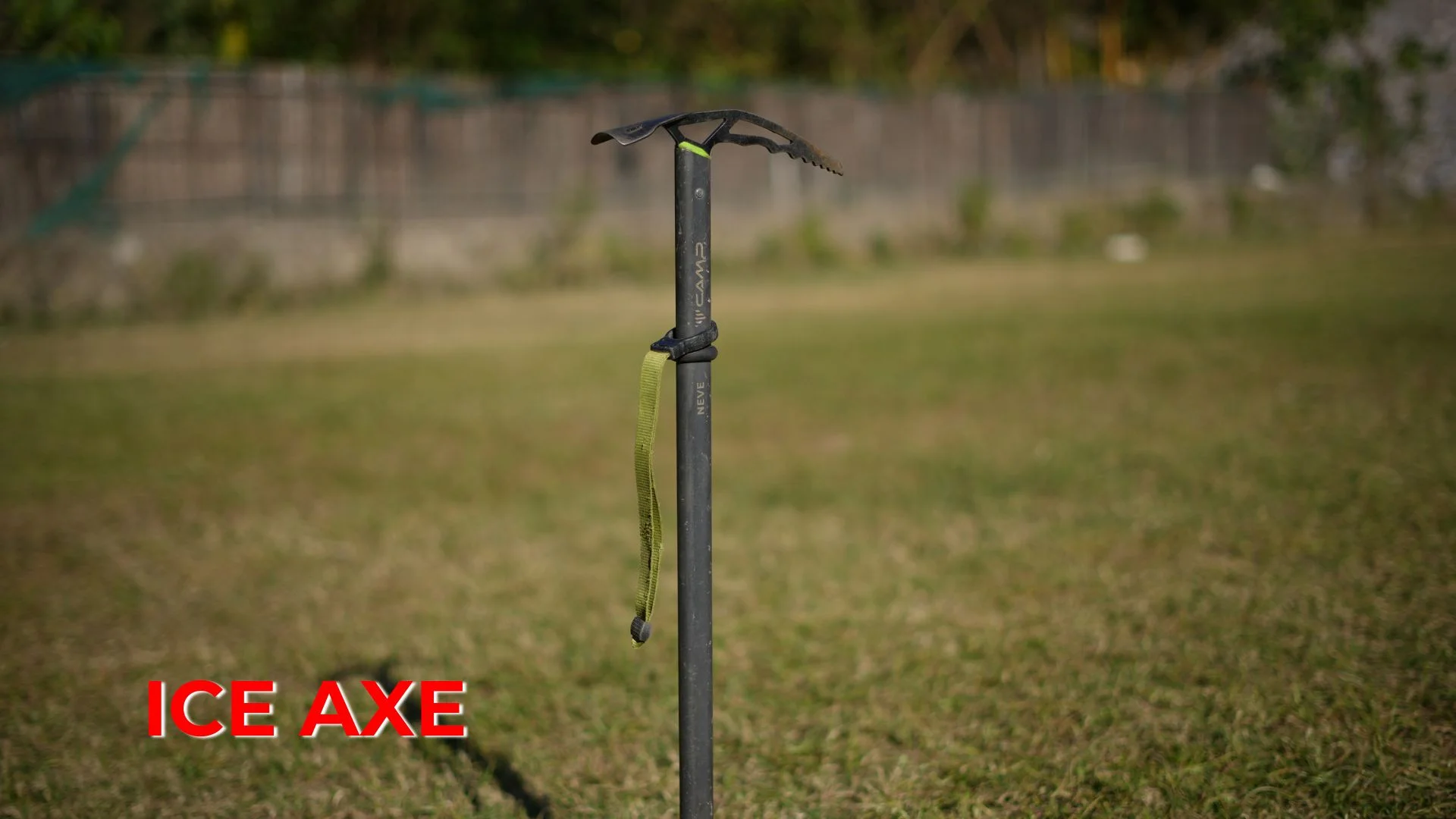
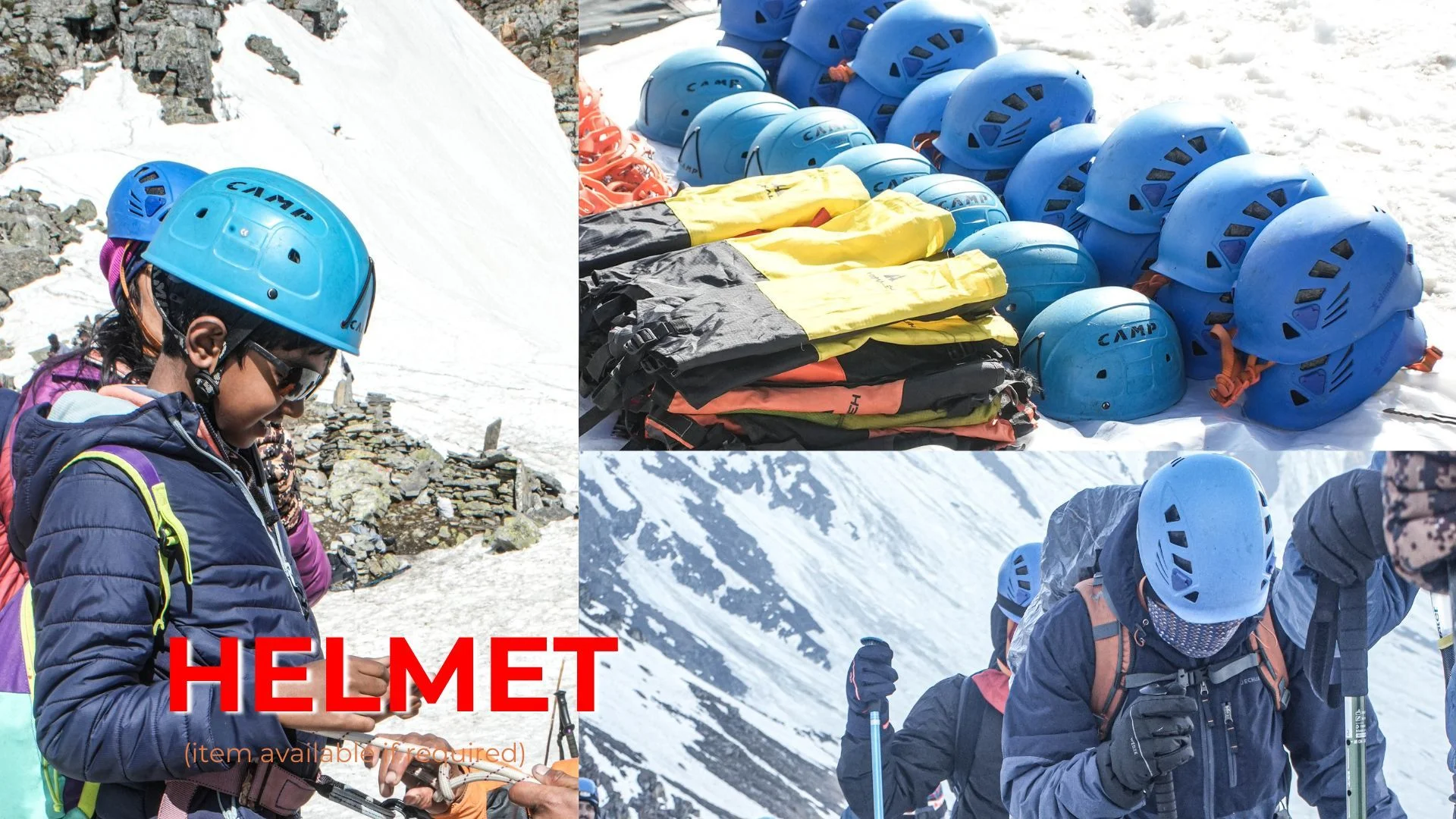
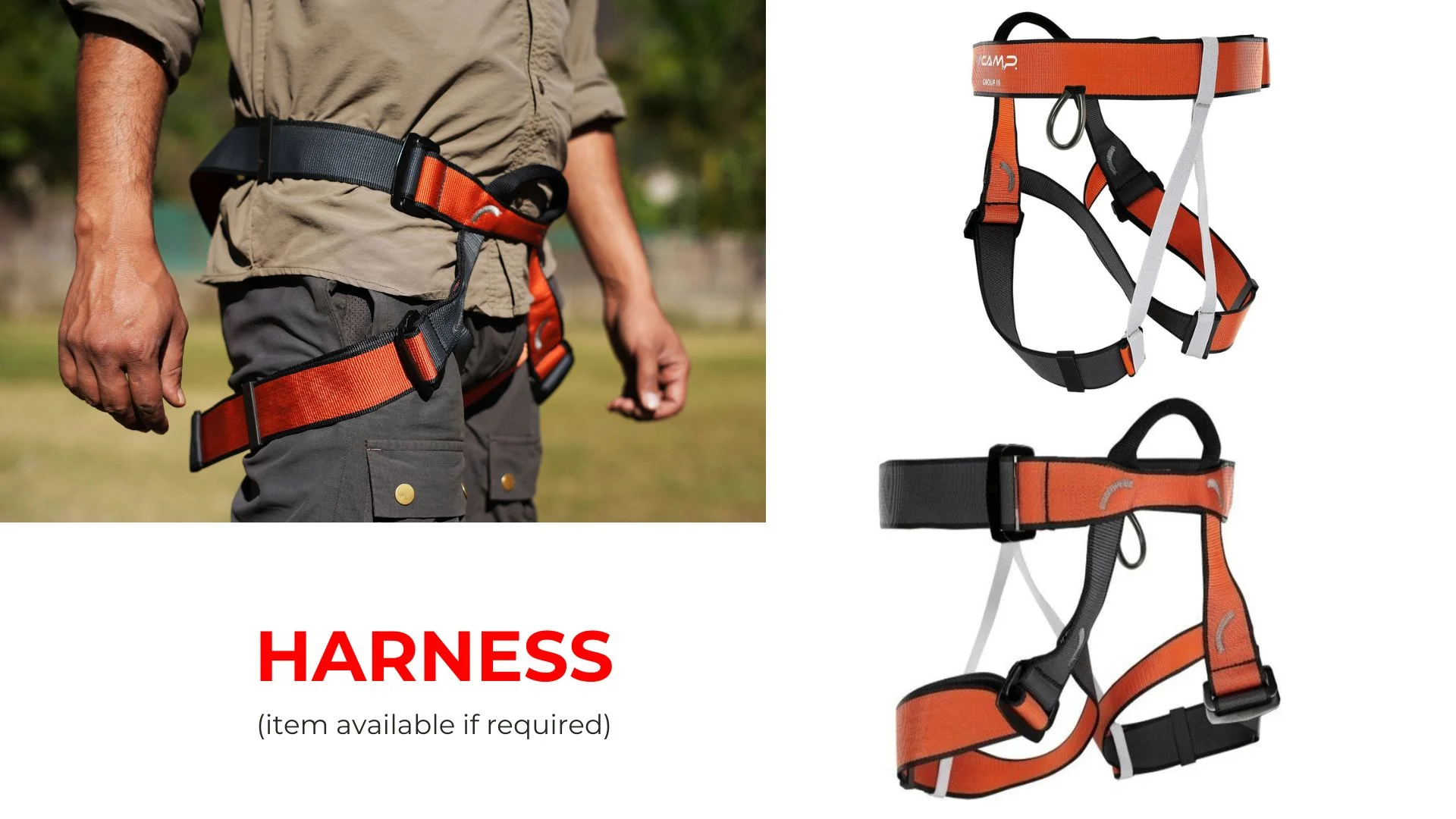
Equipment Provided By Adventure Rishikesh India
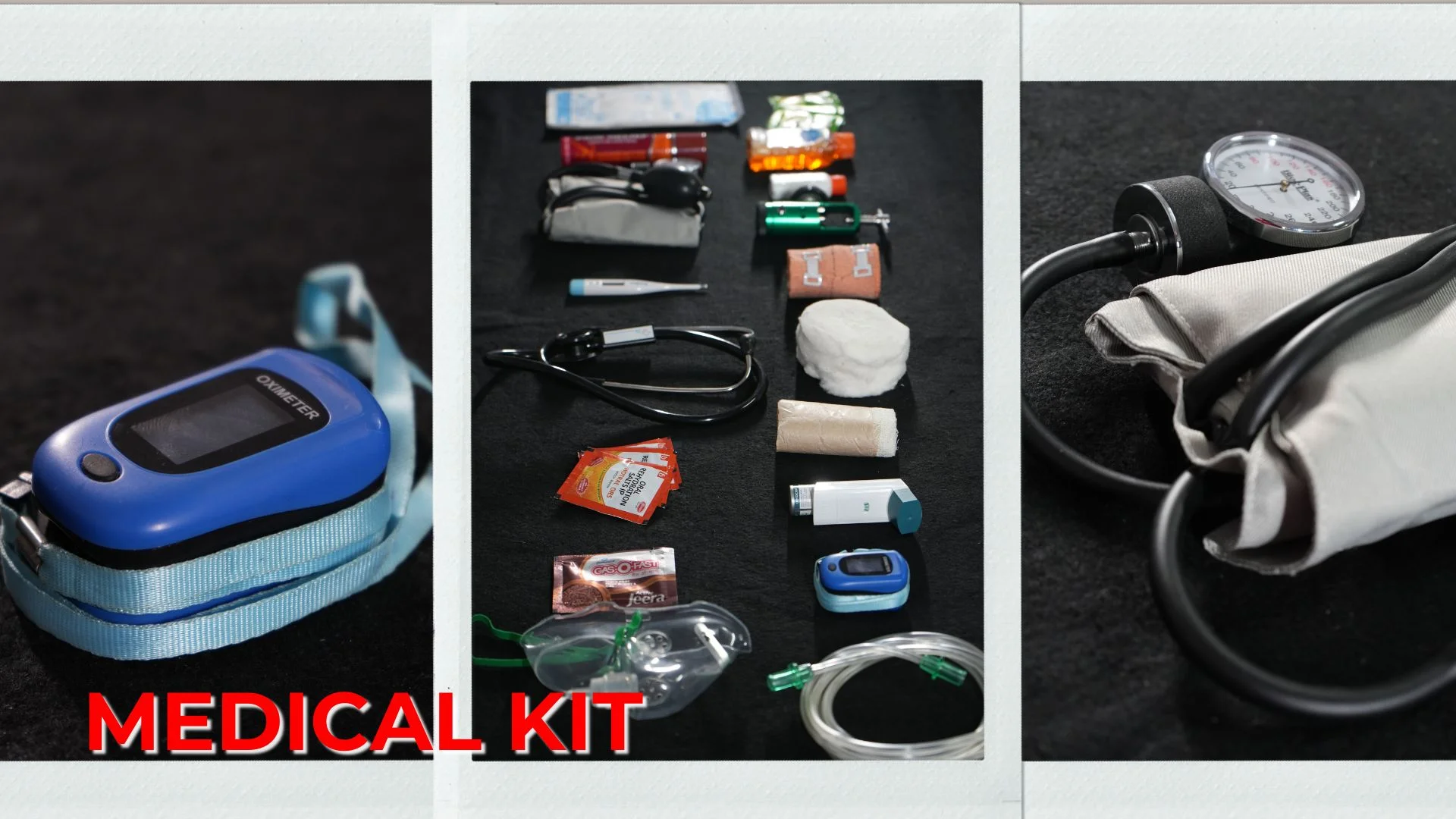
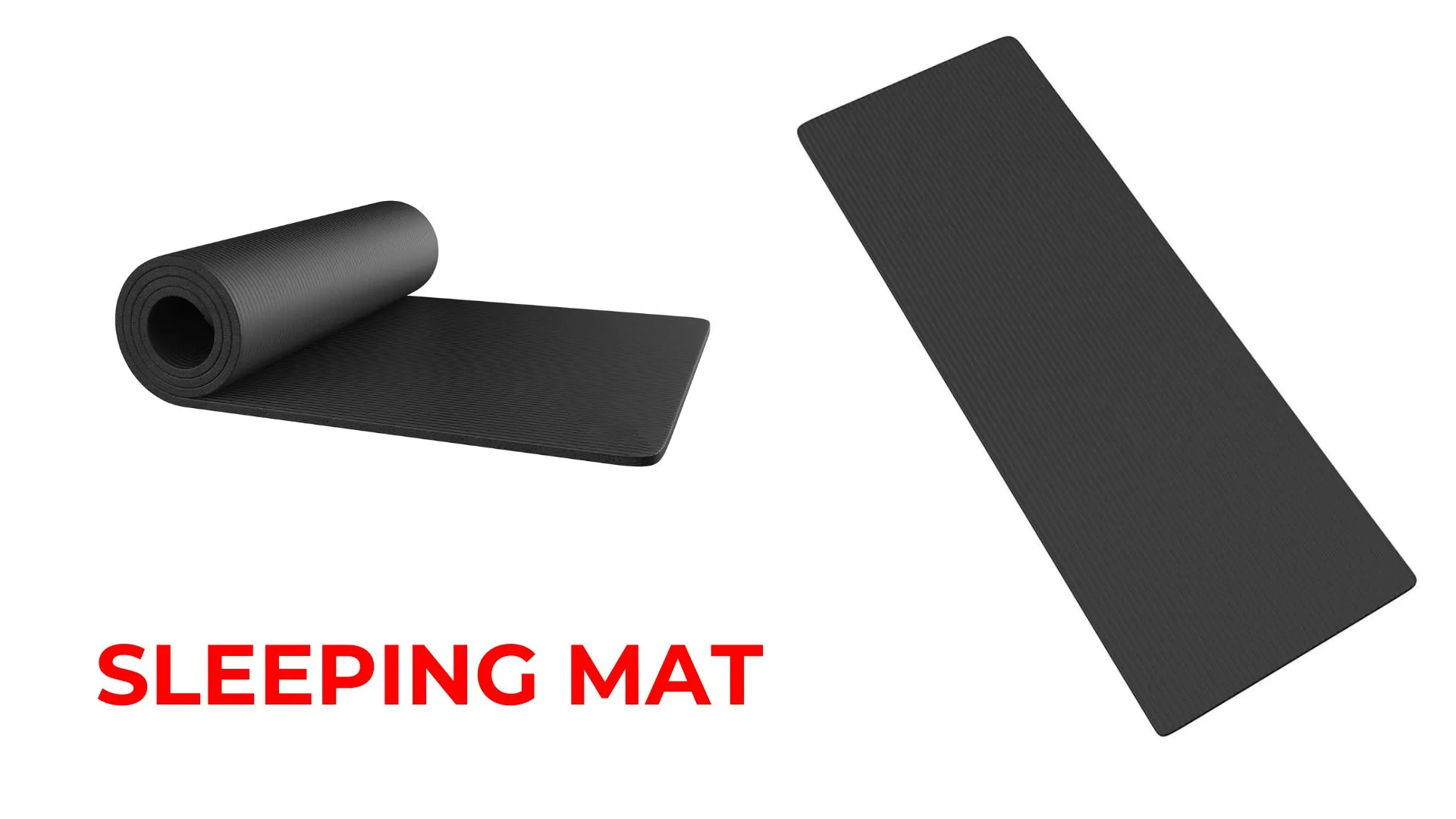
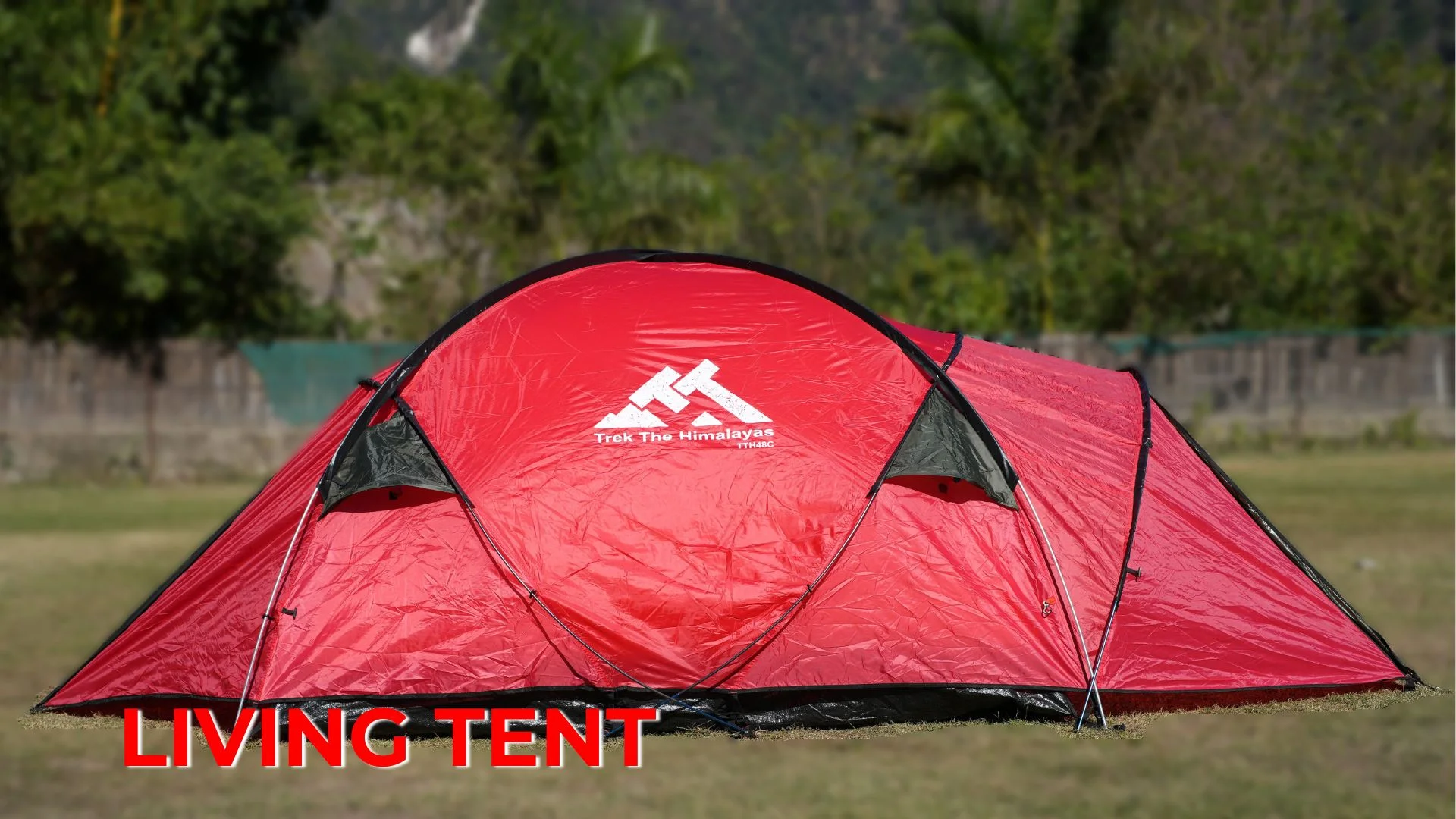
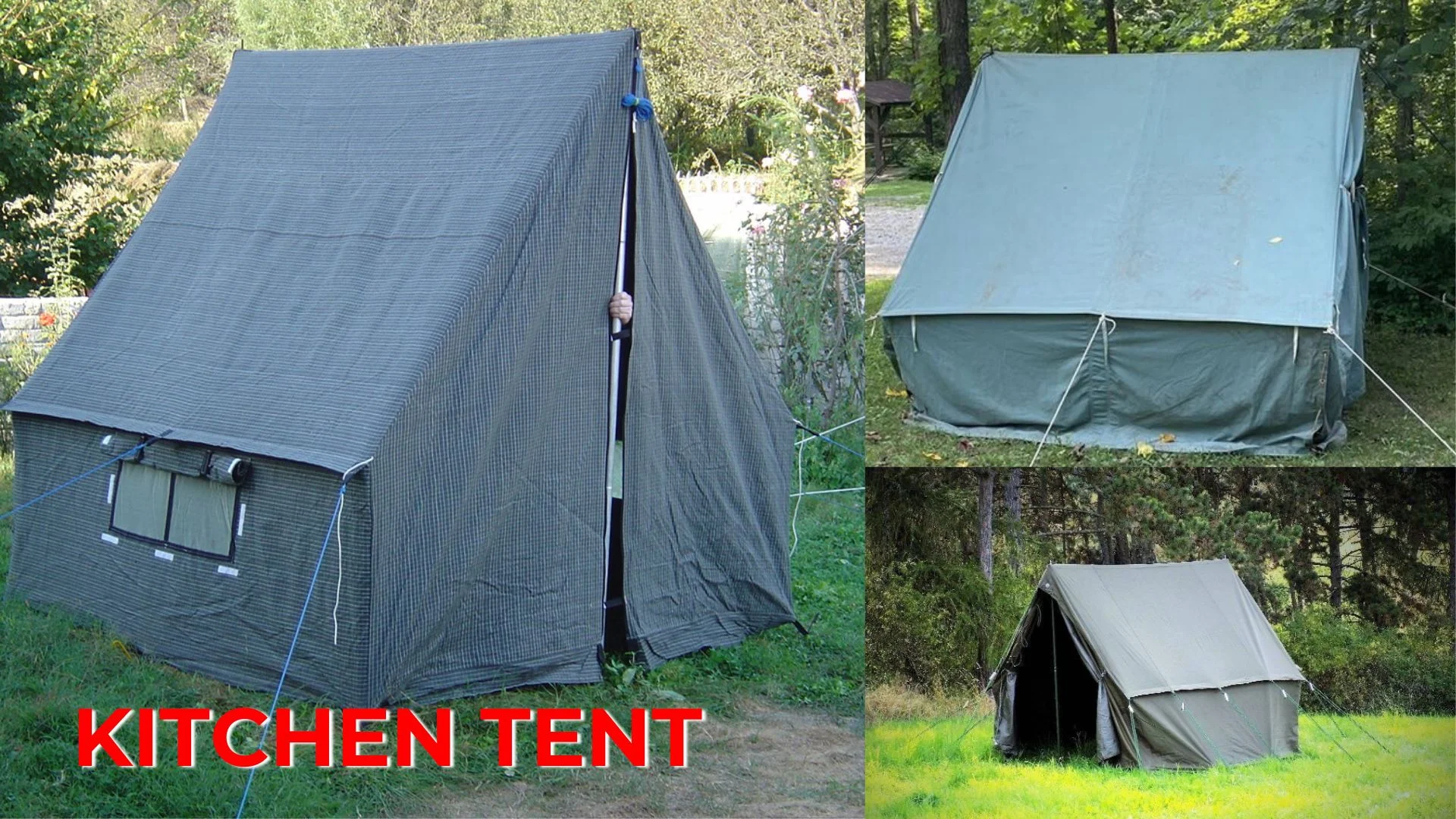
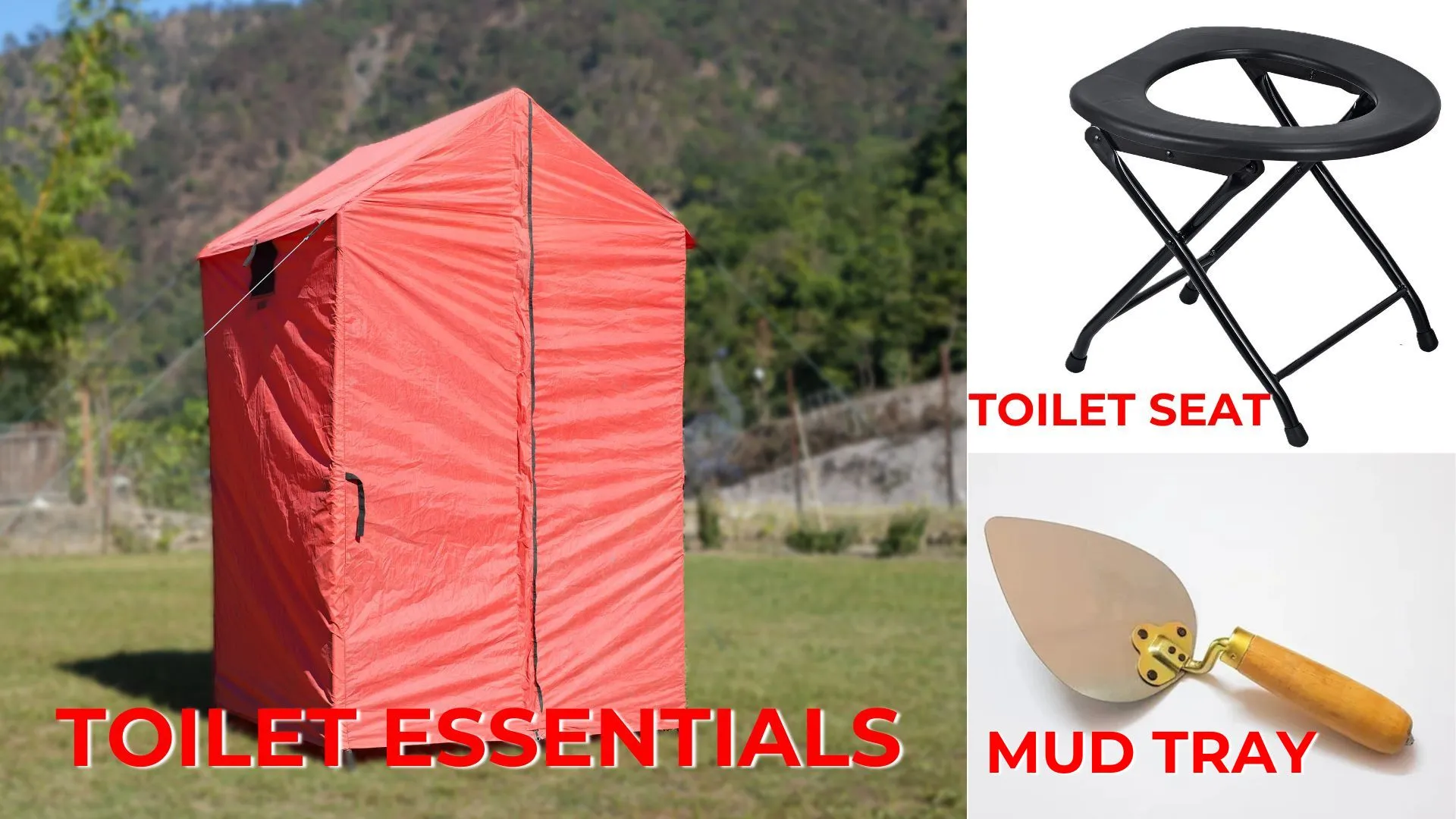
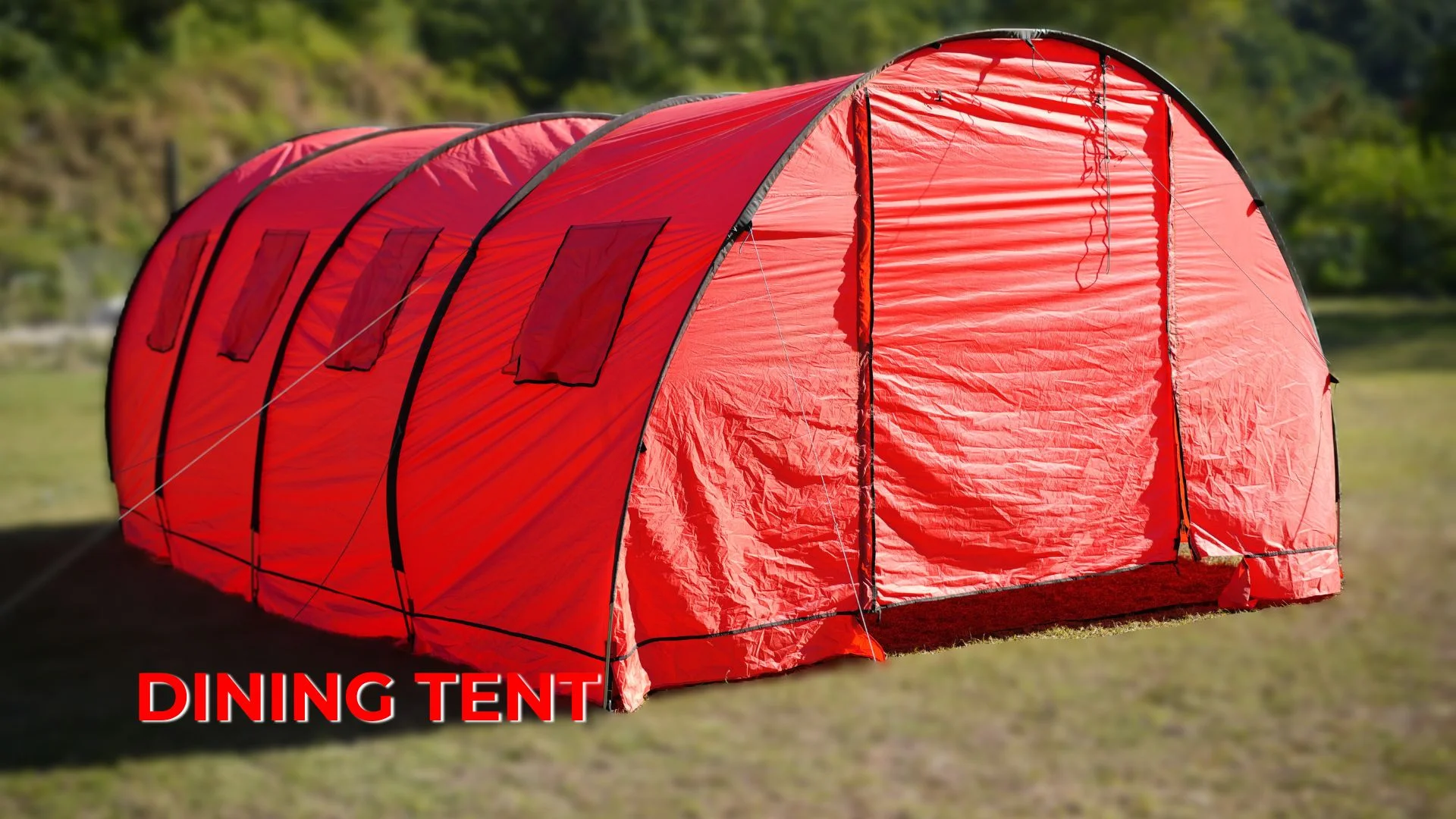

How Difficult Is the Everest Base Camp Trek?
The Everest Base Camp trek is graded difficult. It is not technical, but long days, steep sections and extended time above 4,000 m make it demanding. Altitude sickness (AMS) is the main risk. Our itinerary includes acclimatisation days at Namche and Dingboche, and trek leaders watch every trekker for AMS symptoms.
Fitness guide for the Everest Base Camp trek:
- Be able to cover 5 km in about 30 minutes, or 10 km in 60 to 70 minutes, without stress
- Be comfortable carrying a 12 to 13 kg backpack (or a day pack if you use the offload service)
- Train with cardio, hiking and strength work for 8 to 12 weeks before departure
Who Can Join
- Age: 15 years and above. Trekkers under 15 must be accompanied by a parent or guardian. Trekkers aged 15 to 18 can join solo with a signed guardian form.
- Experience: Previous high-altitude trekking is strongly recommended. Please speak to our coordinator if this is your first high-altitude trek.
- Health: Resting pulse 60 to 90 bpm, blood pressure within normal limits and resting respiratory rate 12 to 20. People with heart, liver or kidney problems, diabetes, asthma or hypertension, and those with a pacemaker, should not book. If you have epilepsy, sinus issues or an abnormal BMI, contact our coordinator first.
Packing List for the Everest Base Camp Trek
- Bags: 50 to 60 litre backpack with rain cover, day pack if you offload, trekking pole
- Layers: Quick-dry t-shirts, fleece, windproof jacket, down jacket, thermals, trek pants, waterproof jacket and pants
- Head and hands: Head torch, sun cap, woollen cap, balaclava, neck gaiters, waterproof and woollen gloves, UV sunglasses
- Feet: Waterproof high-ankle trekking shoes, cotton and woollen socks, floaters
- Personal: Sunscreen, lip balm, moisturiser, quick-dry towel, toilet paper, sanitiser, water bottles, thermos
- Extras: Spare batteries (they drain fast in cold), power bank, enough cash (no ATMs at Lukla), water purification tablets
How to Reach Kathmandu
All trekkers should reach Kathmandu by 1:00 PM on Day 1. Direct flights run from major Indian cities such as Delhi, Mumbai, Kolkata and Bengaluru to Tribhuvan International Airport. You can also travel by train and bus via Gorakhpur or Varanasi to the Sunauli–Bhairahawa border and onward to Kathmandu. Our coordinator shares the hotel name and contact details after booking.
How to Book the Everest Base Camp Trek
- Choose your departure date from the list above
- Message us on WhatsApp at +91 9411 50 3536 or use the Book This Trek button
- Pay the booking amount to reserve your seat
- Receive your packing list, fitness plan and Kathmandu joining details
Our office is at Lakshman Jhula, Near Nainital Bank, Tapovan, Rishikesh, Uttarakhand 249137.
Why Book With Us
- Over 40,000 guests hosted
- Certified trek leaders with first-aid training
- Clear pricing and a detailed inclusion list
- Support in Hindi and English on WhatsApp
- Medical and safety equipment on every batch
Ready for the Everest Base Camp trek? Message us now and we will confirm your seat.

100% Secure Payments
Frequently Asked Questions
For Indian nationals, the cost of Everest Base Camp trek with us is ₹67,000 per person + 5% GST. USD 1,500 + 5% GST for Non-Indian and OCI card holders. Additional charges will be insurance, porterage and personal expenses.
We have 13 days for our itinerary from Kathmandu to Kathmandu with two acclimatization days. Allowance for flight delays – 3-4 days recommended.
The most stable months with the best mountain views are March to May and September to November.
The climbing itself is not technical but it is graded difficult due to the altitude and long days. Good fitness, steady pace and proper acclimatization are key.
About 5,364 m (17,600 ft) high is Everest Base Camp. The highest point of the trek is Kala Patthar at about 5,550 m (18,200 ft).
We recommend previous high altitude trekking and may inquire about your experience when booking. Whatever you’ve been through, you gotta be fit and ready to go.
Yes. We provide the Permits, Entry Fees and TIMS card as per charges for Indian nationals.
You will stay in a 3 star hotel in Kathmandu and in basic teahouses on the trail, typically with shared washrooms at higher altitudes.
Weather is unpredictable. The temperature at the base camp in spring is about 15°C in the day and may drop to 0 to -3°C at nite. In autumn nites can drop to -7°C or below.
Drink lots of water, follow the acclimatization days and tell your trek leader if you have any headache, nausea or dizziness immediately. Slow ascent. Our leaders are trained in AMS management and carry an oxygen and medical kit.
This is usually something you’ll get charged for at most teahouses. Take a power bank and spare batteries. Cold drains batteries more quickly.
You can do solo trekking but a guide or group is safer and our package includes leader support, permits and logistics.
You can reserve your seat by selecting your date and making payment on WhatsApp at +91 9411 50 3536.
Similar Treks By Adventure Rishikesh India
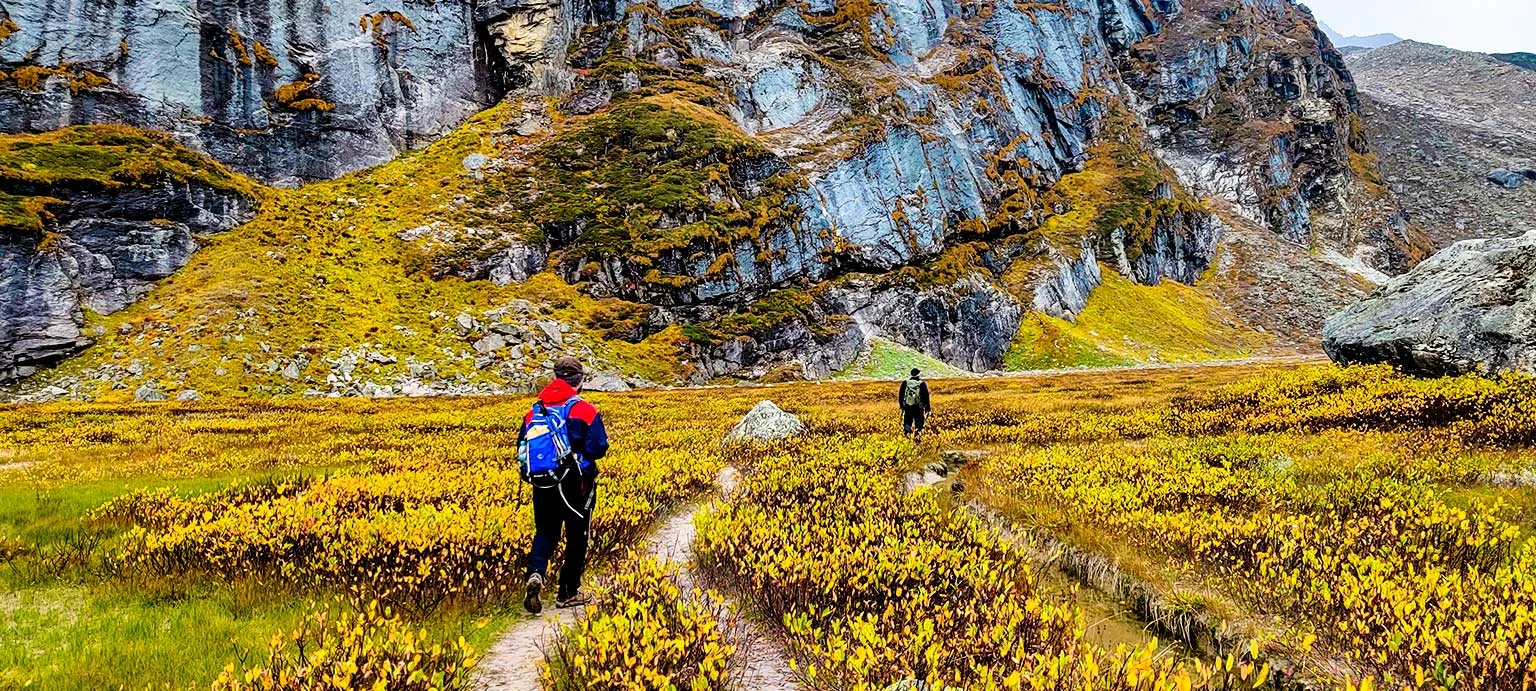
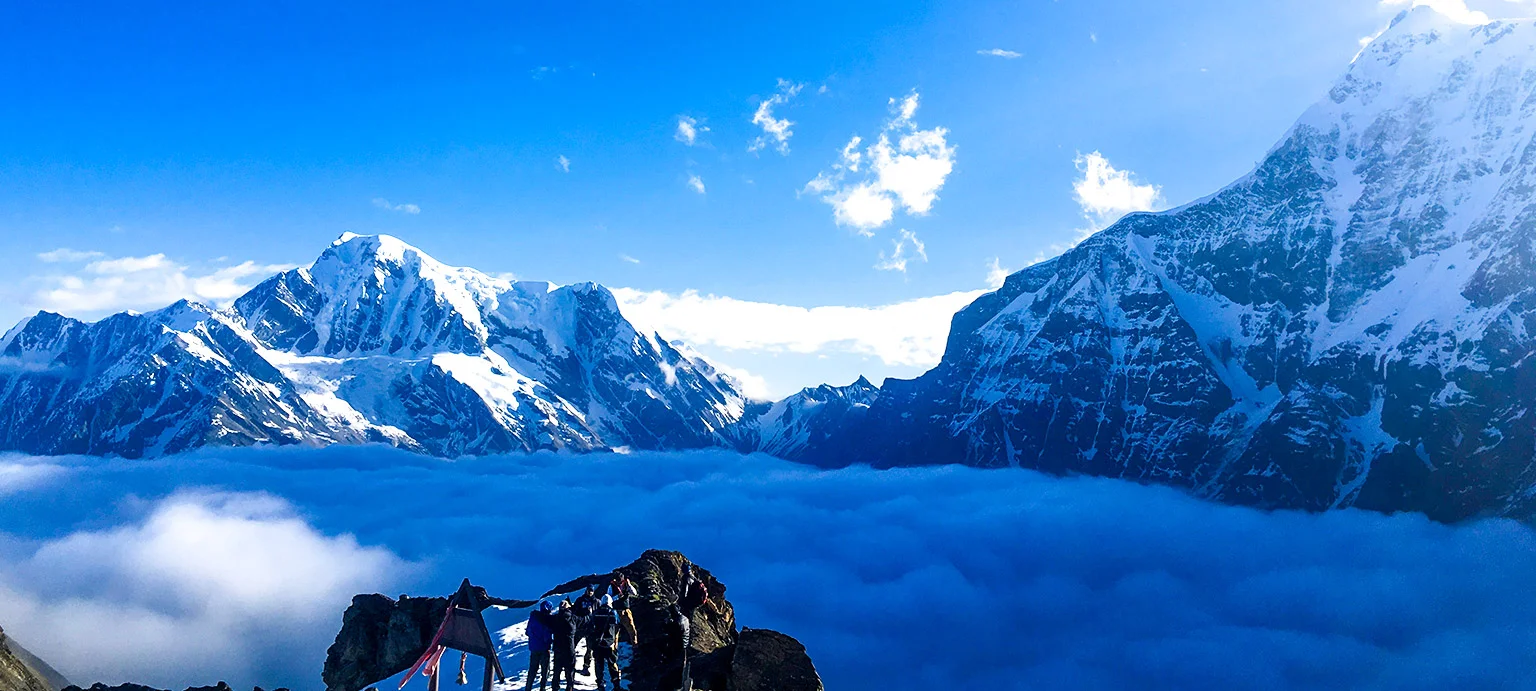
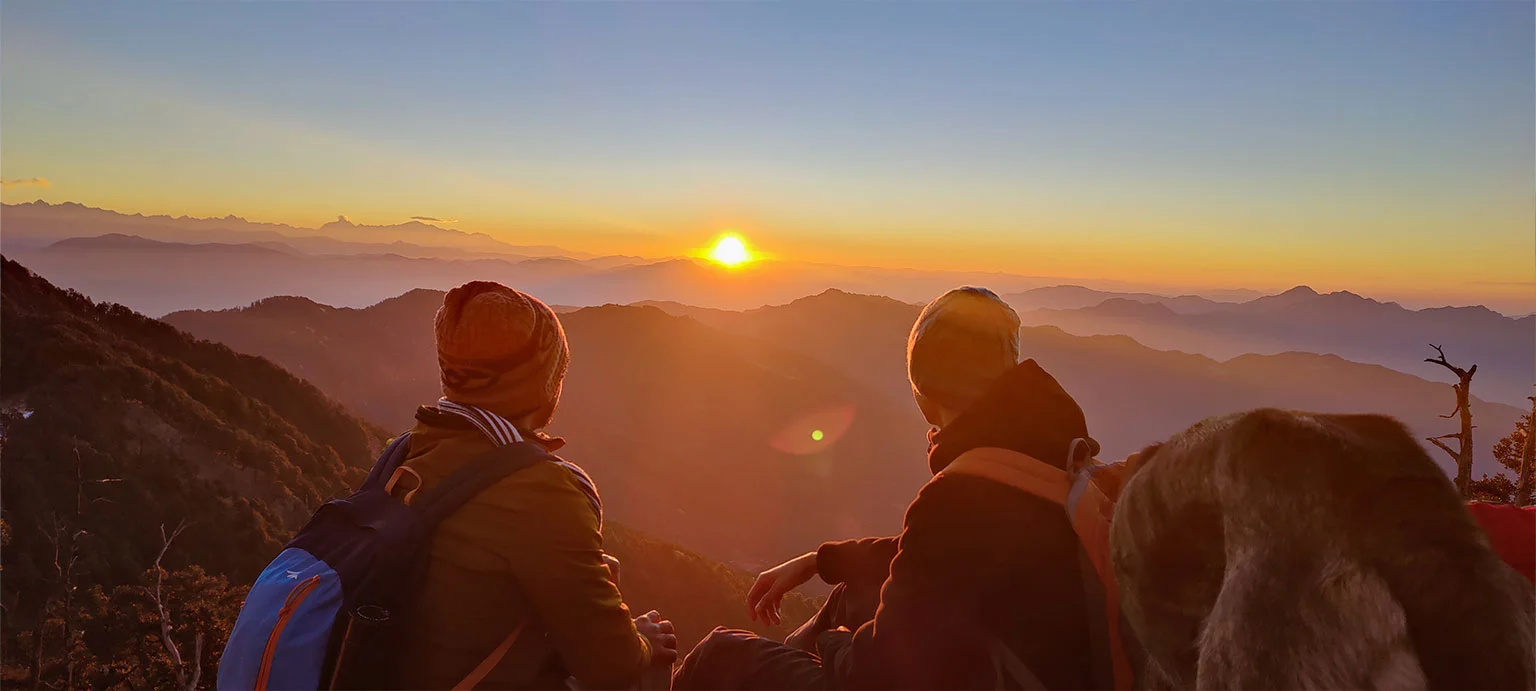
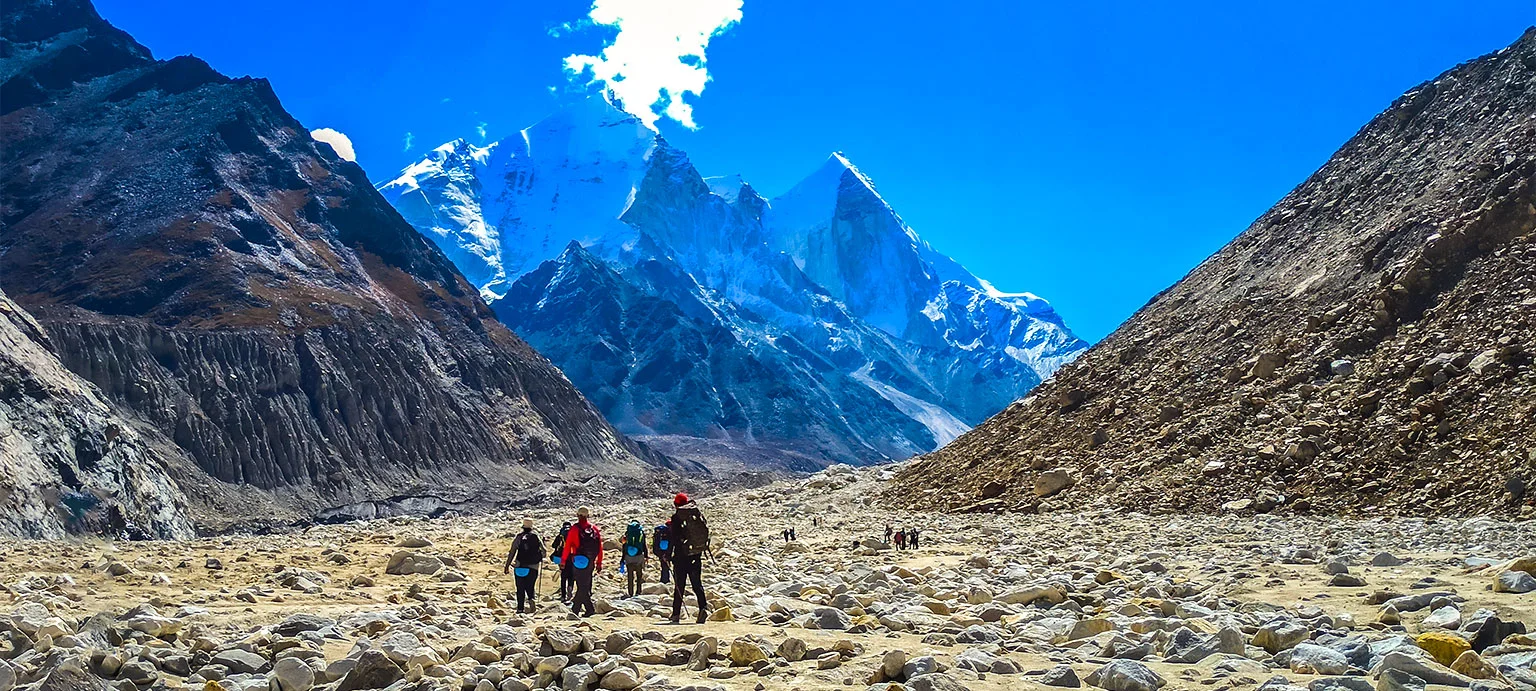
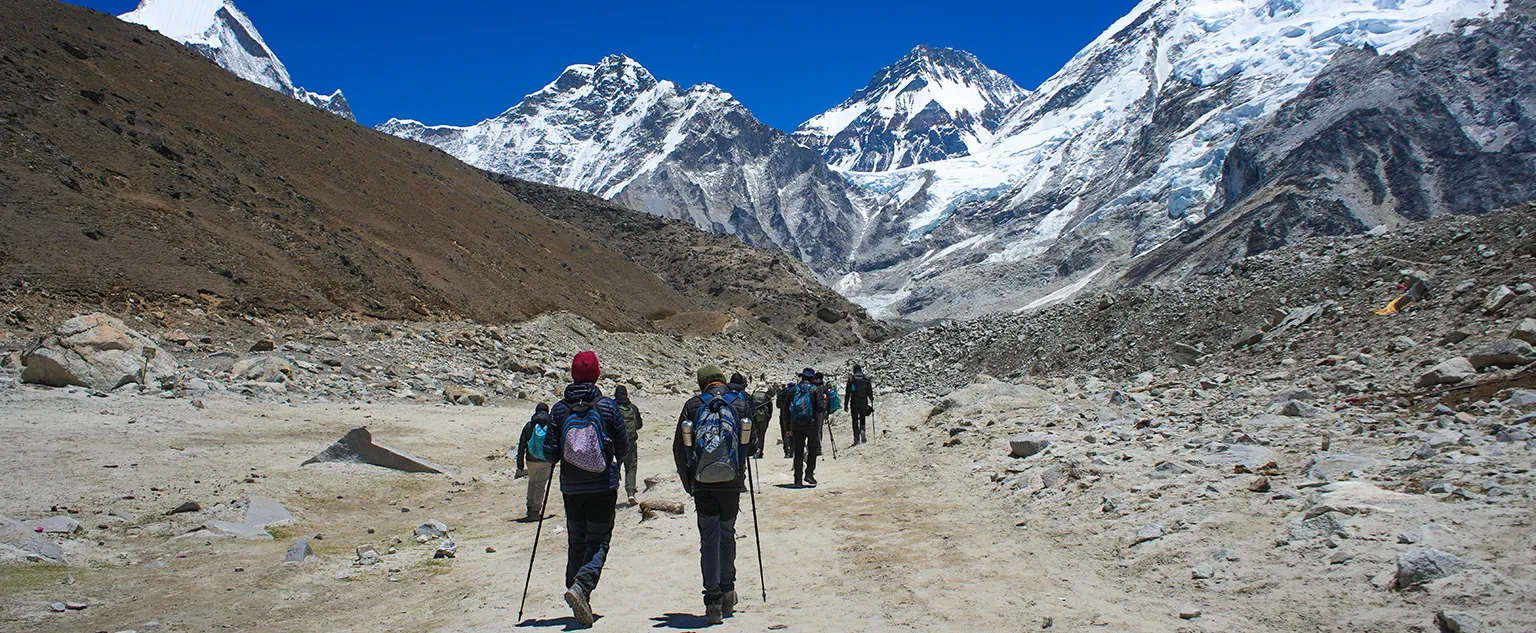
Everest Base Camp Trek
Everest Base Camp Trek is a teahouse trek, meaning you will stay in some of the highest villages in the world, immersing yourself in their cultures, traditions, and life in the remote corners of the Himalayas.